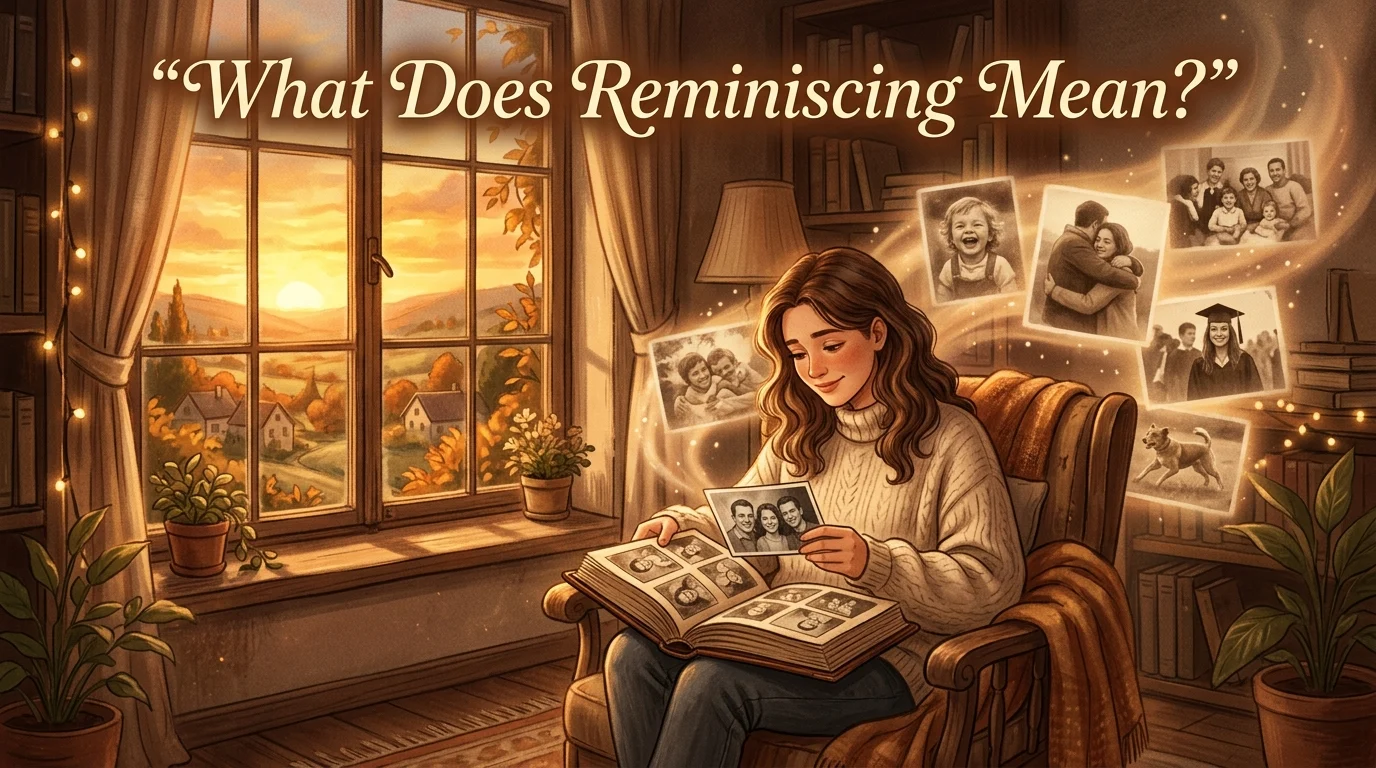
Reminiscing means thinking or talking about past memories with feelings of nostalgia, emotion, or happiness.
We often reminisce without even realizing it—when a song reminds us of childhood, a photo brings back old moments, or a place makes us think about the past.
In simple terms, reminiscing is not just remembering events—it is emotionally reconnecting with meaningful moments from your life.
In this guide, you’ll learn the exact meaning of reminiscing, how to use it correctly in sentences, real-life examples, and related words to improve your English for IELTS, writing, and daily communication.
What Does Reminiscing Mean?
Reminiscing means thinking, talking, or reflecting on past memories and experiences with emotional warmth, nostalgia, or sentimental feelings.
Simple Definition
Reminiscing is the act of remembering meaningful moments from the past, usually in a happy or emotional way.
Example:
“I was reminiscing about our school days last night.”
In this sentence, the speaker is emotionally remembering past memories.
Unlike ordinary remembering, reminiscing usually involves:
- emotions
- nostalgia
- storytelling
- personal reflection
- sentimental connection
That emotional depth is what makes the word special.
Reminiscing Meaning in English
The reminiscing meaning in English refers to emotionally recalling or discussing memories from the past.
People often reminisce about:
- childhood memories
- family moments
- old relationships
- school life
- vacations
- weddings
- friendships
- cultural traditions
- life achievements
Example:
“My grandparents love reminiscing about their younger days.”
The word is commonly used in:
- casual conversations
- storytelling
- emotional speeches
- social media captions
- nostalgic videos
- song lyrics
Reminiscing Pronunciation
Many people search for reminiscing pronunciation because the spelling can look confusing at first.
Correct Pronunciation
Phonetic Pronunciation:
/rɛməˈnɪsɪŋ/
Easy Pronunciation Guide:
reh-muh-NISS-ing
Stress:
The strongest sound is:
“NISS”
Syllables:
Rem • i • nisc • ing
How to Pronounce Reminiscing Naturally
Break the word slowly:
- Reh
- Muh
- Niss
- Ing
Then combine naturally:
reh-muh-NISS-ing
Native speakers pronounce it smoothly with emphasis on “NISS.”
Origin and History of the Word
The word “reminisce” comes from the Latin word:
“reminisci”
Meaning:
“To remember” or “to call to mind.”
The word entered English during the 1600s and became popular in literature, poetry, storytelling, and emotional writing.
Over time, reminiscing became associated with:
- nostalgia
- emotional reflection
- sentimental memories
- meaningful storytelling
Today, the word is widely used in modern internet culture.
People use it across:
- TikTok
- YouTube
- texting
- podcasts
- emotional quotes
- memory reels
The popularity of nostalgia-driven content has made reminiscing more common than ever.
Real-Life Experience: Why People Naturally Start Reminiscing
Many people notice they start reminiscing during emotionally meaningful moments in life.
For example:
- hearing a song from school days
- visiting an old neighborhood
- finding childhood photographs
- meeting old friends after years
- celebrating birthdays or reunions
- watching old family videos
A common experience shared by many people online is that certain smells, songs, or places instantly bring back forgotten memories.
Someone might smell rain and suddenly remember childhood evenings.
Another person may hear an old ringtone and instantly think about school friends.
This emotional memory connection is one reason reminiscing feels deeply personal and powerful.
Unlike ordinary remembering, reminiscing usually carries emotional warmth and sentimental attachment.
That emotional layer is what makes the word so relatable across cultures and generations.
White Heart Meaning: What 🤍 Really Means in Text
Why People Reminisce
Human beings naturally connect memories with emotions.
Many people notice they start reminiscing when:
- hearing old songs
- revisiting childhood places
- watching old videos
- meeting old friends
- seeing family photographs
- celebrating holidays
- experiencing loneliness
- remembering loved ones
Psychologists believe reminiscing helps people feel emotionally connected to their identity and experiences.
In many cases, reminiscing creates:
- emotional comfort
- happiness
- gratitude
- belonging
- social connection
- emotional healing
For example, someone might hear an old song from school days and suddenly remember friends, classrooms, jokes, and emotions connected to that time.
This emotional connection explains why reminiscing feels powerful.
Scientific and Psychological Research Behind Reminiscing
Psychologists have studied nostalgia and emotional memory for years.
Research published by psychology organizations suggests that positive reminiscing may help improve mood, reduce feelings of loneliness, and strengthen emotional connection with personal identity.
Experts believe nostalgic memories can sometimes create psychological comfort during stressful periods because the brain emotionally reconnects with meaningful experiences.
This explains why people often revisit:
- childhood songs
- family photos
- old text messages
- memorable vacations
- relationship memories
Researchers also note that emotionally meaningful memories are often remembered more strongly than ordinary daily events.
This is why some moments stay emotionally vivid even after many years.
The Psychology Behind Reminiscing
One reason reminiscing has become extremely popular online is because nostalgia strongly affects human emotions.
Research in psychology suggests that positive reminiscing can:
- improve mood
- reduce loneliness
- strengthen social bonds
- increase emotional stability
- help people feel connected to meaningful experiences
That’s why people enjoy:
- throwback posts
- old photographs
- family stories
- nostalgic music
- reunion videos
- childhood memories
Why Songs Trigger Reminiscing
Music is deeply connected to emotional memory.
Many people experience strong reminiscing when listening to songs from:
- teenage years
- relationships
- school life
- family events
- vacations
The brain often stores music together with emotions and experiences.
That’s why a single song can instantly bring back powerful memories.
Why Photos Trigger Reminiscing
Photographs visually reactivate emotional memories.
Old photos remind people of:
- people they loved
- places they visited
- milestones
- traditions
- moments of happiness
This is why photo albums, memory reels, and throwback posts are emotionally powerful.
Circa Meaning: Everything You Need to Know
Reminiscing Meaning in Texting
In texting, reminiscing usually means emotionally remembering old experiences or talking about meaningful memories.
People commonly use the word in:
- friendship chats
- emotional conversations
- relationship discussions
- nostalgic messages
Emojis often used with reminiscing include:
- 🥹
- ❤️
- 💭
- 🌅
- 🥲
Texting Examples
Example 1
Friend 1:
“Just reminiscing about our college days 🥹”
Friend 2:
“Those memories were unforgettable.”
Example 2
“I’ve been reminiscing about our old road trips lately.”
Example 3
“Still reminiscing about that amazing concert.”
In texting culture, the word usually signals emotional reflection and nostalgia.
Reminiscing Meaning on Instagram and TikTok
Social media platforms helped make reminiscing even more popular.
People often use the word in:
- throwback captions
- emotional reels
- friendship edits
- relationship posts
- memory videos
- travel montages
Example Captions
- “Reminiscing about the best summer ever 🌞”
- “Still reminiscing about these beautiful moments ❤️”
- “Some memories never fade.”
- “Happiness is reminiscing with people you love.”
Why Nostalgic Content Performs Well Online
Modern audiences emotionally connect with memories.
That’s why hashtags like:
- #Throwback
- #TBT
- #Memories
- #OldDays
- #Nostalgia
receive strong engagement online.
Gen Z and millennials especially enjoy nostalgic storytelling because it creates emotional connection and relatability.
Modern social media algorithms also tend to reward emotional and relatable content. This is one reason nostalgic reels, throwback posts, and memory-based captions often receive high engagement.
Content creators frequently use reminiscing-style captions because they encourage comments, emotional reactions, and shared experiences from audiences.
Reminiscing in Real-Life Conversations
Understanding real examples helps you use the word naturally.
Friendship Example
Friend 1:
“I was reminiscing about our school picnic today.”
Friend 2:
“That was one of the best days ever.”
Family Example
“My grandparents enjoy reminiscing about village life.”
Relationship Example
“We spent hours reminiscing about how we first met.”
Emotional Example
“He sat quietly reminiscing over old photographs.”
Reminiscing in Business and Professional Usage
Although reminiscing is mostly casual, it can also appear in professional storytelling.
Leaders and speakers sometimes reminisce about:
- company beginnings
- career struggles
- early failures
- business growth
- team achievements
Example:
“The founder reminisced about starting the company in a small room with limited resources.”
In professional settings, the word adds emotional depth and authenticity.
Grammar and Tense Usage
Many users search for:
- reminiscing meaning past tense
- I am reminiscing meaning
- I’ve been reminiscing meaning
- still reminiscing meaning
Here’s a simple breakdown.
Base Verb
Reminisce
Present Participle
Reminiscing
Past Tense
Reminisced
Examples
Present
“I am reminiscing about childhood memories.”
Past
“We reminisced all night about school life.”
Future
“One day we will reminisce about these moments.”
I’ve Been Reminiscing Meaning
This phrase means someone has recently been emotionally thinking about old memories.
Example:
“I’ve been reminiscing about my school friends lately.”
I Am Reminiscing Meaning
This means someone is currently thinking emotionally about past experiences.
Example:
“I am reminiscing about our family vacations.”
Still Reminiscing Meaning
This phrase means someone continues to emotionally think about a memory.
Example:
“Still reminiscing about that magical trip.”
Happiness Is Reminiscing Meaning
This phrase suggests that remembering meaningful memories can create emotional happiness.
People commonly use it in:
- captions
- quotes
- emotional posts
- family memories
Stop Reminiscing Meaning
This means:
Stop emotionally focusing on the past.
Example:
“You should stop reminiscing and focus on the present.”
Little River Band “Reminiscing” Meaning
Many users search for:
“Little River Band reminiscing meaning”
because of the famous song “Reminiscing.”
In the song, reminiscing represents:
- love
- emotional nostalgia
- romantic memories
- meaningful shared experiences
The song became popular because listeners emotionally connected with its nostalgic storytelling.
Toosii Reminiscing Meaning
People also search for:
“Toosii reminiscing meaning”
In modern music culture, reminiscing often refers to:
- emotional reflection
- relationship memories
- personal growth
- struggles from the past
- emotional healing
Artists use nostalgia to create deeper emotional connection with listeners.
Reminiscing Synonyms
Many users search for reminiscing meaning synonyms.
Here are the most common synonyms.
| Synonym | Meaning |
|---|---|
| Nostalgic | Feeling emotional about the past |
| Reflecting | Thinking deeply about experiences |
| Remembering | Recalling memories |
| Recalling | Bringing memories back |
| Looking back | Thinking about earlier times |
| Sentimental | Emotionally attached to memories |
| Daydreaming | Emotionally imagining moments |
Example:
“She sat quietly reflecting on childhood memories.”
Reminiscing Meaning Antonym
An antonym means the opposite.
Common Antonyms
| Antonym | Meaning |
|---|---|
| Forgetting | Losing memories |
| Ignoring | Not thinking about the past |
| Overlooking | Failing to remember |
| Disregarding | Paying no attention |
| Moving on | Leaving the past behind |
Difference Between Reminiscing and Remembering
Many people think reminiscing and remembering are identical, but they are slightly different.
| Reminiscing | Remembering |
|---|---|
| Emotional and nostalgic | Neutral memory recall |
| Often positive | Can be neutral |
| Usually reflective | Simple remembering |
| Emotionally meaningful | Informational recall |
Example:
Remembering:
“I remember the address.”
Reminiscing:
“I miss those beautiful school memories.”
Difference Between Reminiscing and Reflecting
Reflecting usually involves analysis, lessons, or self-improvement.
Reminiscing focuses more on emotional enjoyment of memories.
Example
Reflecting:
“I reflected on my mistakes.”
Reminiscing:
“I reminisced about my childhood adventures.”
Reminiscing Meaning in Different Languages
Because the word is globally searched, many people look for translations.
Reminiscing Meaning in Hindi
पुरानी यादों को याद करना
Meaning:
Emotionally remembering old memories.
Reminiscing Meaning in Arabic
الحنين إلى الماضي
Meaning:
Feeling nostalgic about the past.
Reminiscing Meaning in Chinese
回忆过去
Meaning:
Recalling the past emotionally.
Reminiscing Meaning in Russian
Предаваться воспоминаниям
Meaning:
Emotionally remembering past experiences.
Reminiscing Meaning in Farsi
خاطرهبازی کردن
Meaning:
Remembering memories emotionally.
Reminiscing Meaning in Bengali
পুরোনো স্মৃতিচারণ করা
Meaning:
Talking emotionally about old memories.
Reminiscing Meaning in Telugu
పాత జ్ఞాపకాలను గుర్తు చేసుకోవడం
Meaning:
Remembering old memories fondly.
Reminiscing Meaning in Kannada
ಹಳೆಯ ನೆನಪುಗಳನ್ನು ಸ್ಮರಿಸುವುದು
Meaning:
Thinking warmly about old memories.
Reminiscing Meaning in Spanish
Recordar con nostalgia
Meaning:
Remembering something with nostalgia.
Is Reminiscing Healthy?
According to psychological studies on nostalgia and emotional memory, moderate reminiscing can positively affect emotional well-being when it focuses on meaningful or comforting memories.
Many therapists and mental health researchers believe emotionally positive memories can sometimes help people feel more grounded and socially connected.
However, excessive focus on painful memories may increase sadness or emotional distress.
Healthy reminiscing usually involves balance, reflection, gratitude, and emotional connection rather than becoming emotionally stuck in the past.
Is Reminiscing Healthy?
In many situations, yes.
Healthy reminiscing can:
- improve mood
- strengthen relationships
- reduce loneliness
- increase gratitude
- create emotional comfort
However, constantly focusing on painful memories may negatively affect emotional health.
Balance is important.
Positive reminiscing usually helps people feel emotionally connected to meaningful experiences.
Common Situations Where People Reminisce
People often reminisce during:
- reunions
- weddings
- anniversaries
- birthdays
- holidays
- school meetups
- family gatherings
- travel memories
- relationship conversations
Common triggers include:
- songs
- smells
- photos
- places
- videos
- gifts
- old messages
Common Mistakes People Make
1. Confusing Reminiscing with Complaining
Reminiscing is usually emotional and warm.
Complaining is negative.
2. Using It Without Emotional Context
The word naturally carries emotional reflection.
Incorrect:
“I was reminiscing about my math homework.”
Better:
“I was reminiscing about childhood summers.”
3. Mixing Nostalgic and Reminiscing
Nostalgic
Describes the emotional feeling.
Reminiscing
Describes the act of remembering.
Example:
“She felt nostalgic while reminiscing.”
Frequently Asked Questions
What does reminiscing mean in texting?
In texting, reminiscing means emotionally remembering or discussing meaningful memories from the past.
Is reminiscing positive or negative?
Usually positive or emotional, although it can sometimes involve sadness or longing.
Is reminiscing slang?
No. It is a standard English word used in conversations, storytelling, and social media.
What are reminiscing synonyms?
Common synonyms include:
- remembering
- reflecting
- recalling
- sentimental thinking
- looking back
What is the antonym of reminiscing?
Common antonyms include:
- forgetting
- ignoring
- overlooking
- moving on
Why do songs cause reminiscing?
Music strongly connects with emotional memory, which is why songs often trigger nostalgic feelings and old memories.
Can reminiscing make people emotional?
Yes. Reminiscing often activates emotional memories connected to meaningful life experiences.
How do you pronounce reminiscing?
It is pronounced:
reh-muh-NISS-ing
Why do people enjoy reminiscing?
People enjoy reminiscing because it creates emotional comfort, connection, nostalgia, and happiness.
Conclusion
Reminiscing is more than just remembering the past — it’s about emotionally reconnecting with meaningful moments, experiences, and people that left an impact on our lives. Whether used in conversations, texting, Instagram captions, or emotional storytelling, the word beautifully expresses nostalgia, warmth, and reflection.
From understanding reminiscing meaning in English and pronunciation to exploring its synonyms, emotional usage, and translations in different languages, this guide covered everything you need to know about the term. We also explored how reminiscing is used in social media culture, psychology, music, and everyday life.
In a world where memories are constantly shared through photos, videos, and stories, reminiscing has become a powerful way for people to reconnect with their emotions and experiences.
The next time you hear an old song, see a childhood picture, or think about special moments from the past, you’ll understand exactly why people call that feeling reminiscing.

Willie Nelson is a skilled and passionate content writer working as an expert author at maeningg.com. With strong knowledge of digital trends, slang meanings, and engaging online content, Willie focuses on creating clear, helpful, and reader-friendly articles.