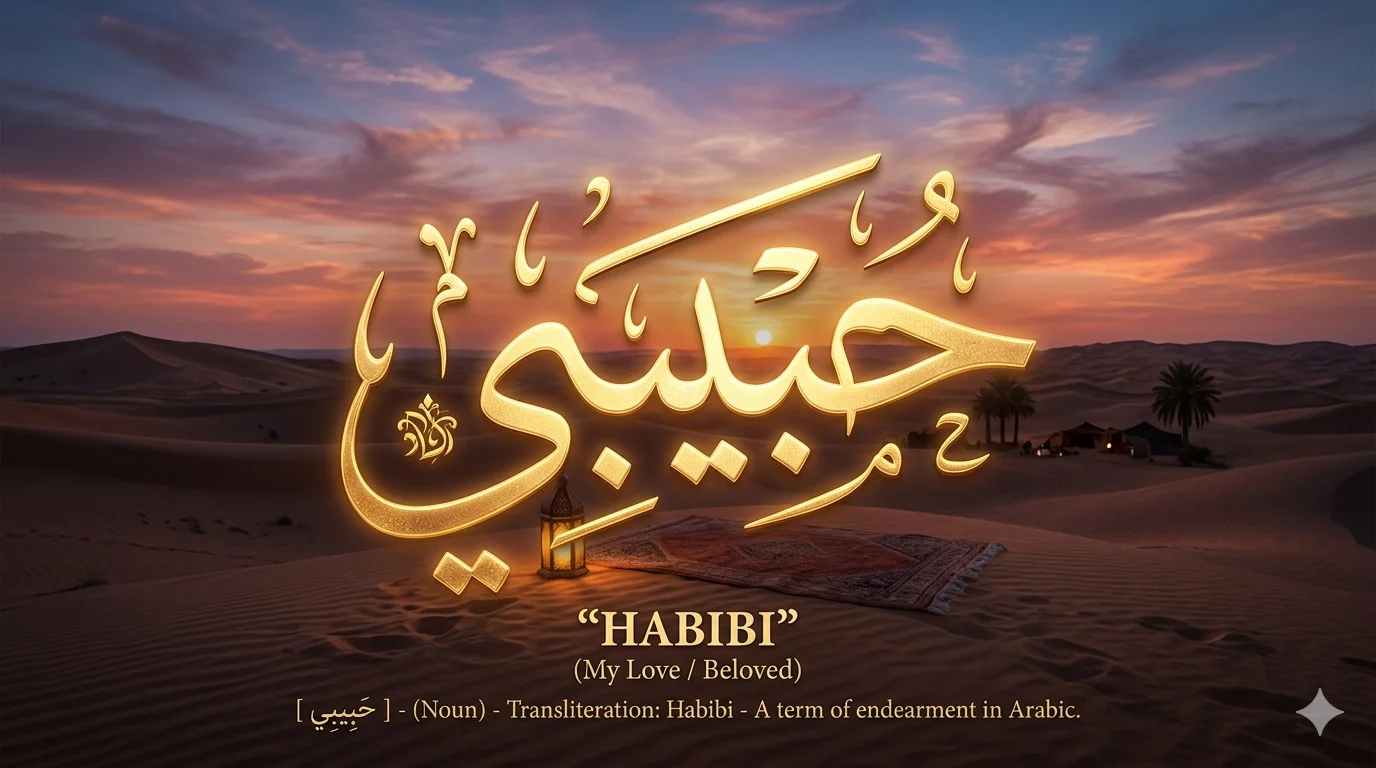
Has someone called you “Habibi” and left you wondering whether they were flirting or simply being friendly? Habibi (حبيبي) is an Arabic word that means “my beloved,” “my dear,” “my darling,” or “my friend,” depending on the relationship and context.
It comes from the Arabic word hubb (love) and is widely used across the Arab world as a warm expression of affection, respect, or friendship. Although many people discover the word through TikTok, Instagram, songs, movies, or viral videos, Habibi has been part of everyday Arabic conversation for centuries.
In simple terms, Habibi is much more than a romantic nickname. Friends, family members, parents, partners, and even shopkeepers may use it to express kindness or closeness. For example, a friend might say “Thanks, Habibi!” to show appreciation, while a husband or wife might use Habibi as a loving term of endearment. The exact meaning changes slightly depending on who is speaking, their relationship, and the cultural setting.
If you’re wondering how to pronounce Habibi, when it’s appropriate to use it, whether it’s a compliment, or how it differs from Habibti, you’ve come to the right place. This guide explains its meaning, pronunciation, origin, cultural significance, real-life examples, and proper usage in simple English, so you can understand exactly what Habibi means and use it naturally and respectfully with confidence.
What Does Habibi Mean?
The word habibi comes from Arabic and is used as a warm, affectionate way to address someone.
Habibi Meaning
Common English translations include:
- My love
- My dear
- My beloved
- My darling
- Sweetheart
- Dear friend
Unlike some English expressions, habibi can be used in both romantic and non-romantic situations.
For example:
- A mother may call her son habibi.
- Friends may call each other habibi.
- A husband may call his wife habibi.
- Grandparents may call grandchildren habibi.
This flexibility makes the word one of the most beloved Arabic expressions.
Habibi Meaning in English
The most common habibi meaning in English is:
“My love.”
However, translating habibi into English isn’t always straightforward because the word carries emotional warmth that doesn’t always have a perfect English equivalent.
Depending on context, habibi may mean:
| Arabic Term | English Meaning |
|---|---|
| Habibi | My love |
| Habibi | My dear |
| Habibi | My beloved |
| Habibi | Darling |
| Habibi | Dear friend |
Example Sentences
Thank you, habibi.
→ Thank you, my dear.
I miss you, habibi.
→ I miss you, my love.
Welcome, habibi.
→ Welcome, my friend.
The exact translation depends on the relationship between the speakers.
Habibi Meaning in Arabic
The Arabic spelling of habibi is:
حبيبي
Pronunciation
Ha-BEE-bee
IPA pronunciation:
/ħaˈbiːbi/
Linguistic Breakdown
The word comes from the Arabic root:
حب (Hubb)
which means:
Love
From this root, several related words are formed:
| Arabic Word | Meaning |
|---|---|
| Hubb | Love |
| Habib | Beloved |
| Habibi | My beloved |
| Habibti | My beloved (female) |
| Mahbub | Loved one |
The ending “-i” means “my” in Arabic.
Therefore:
Habib = Beloved
Habibi = My Beloved
This simple structure explains why the word carries such a strong emotional meaning.
Habibi Meaning in Urdu
Because of Islamic influence, Arabic education, and social media, many people search for habibi meaning in Urdu.
Habibi Meaning in Urdu
حبیبی کا مطلب ہے:
- میری جان
- میرے پیارے
- میرے محبوب
- عزیز دوست
- دل کے قریب شخص
Urdu Examples
شکریہ حبیبی
→ شکریہ میرے پیارے
کیسے ہو حبیبی؟
→ کیسے ہو میرے دوست؟
شب بخیر حبیبی
→ شب بخیر میری جان
Although habibi is not originally an Urdu word, it is widely understood by many Urdu speakers today.
Habibi Meaning in Hindi
The habibi meaning in Hindi is similar to its Urdu translation.
Hindi Meanings
- मेरा प्यार
- मेरे प्रिय
- मेरे प्यारे
- प्रिय मित्र
- मेरा प्रियतम
Examples
Good morning, habibi
→ सुप्रभात, मेरे प्यारे
Thank you, habibi
→ धन्यवाद, मेरे प्रिय
The word has become increasingly familiar among Hindi speakers through Arabic songs, films, social media, and international travel.
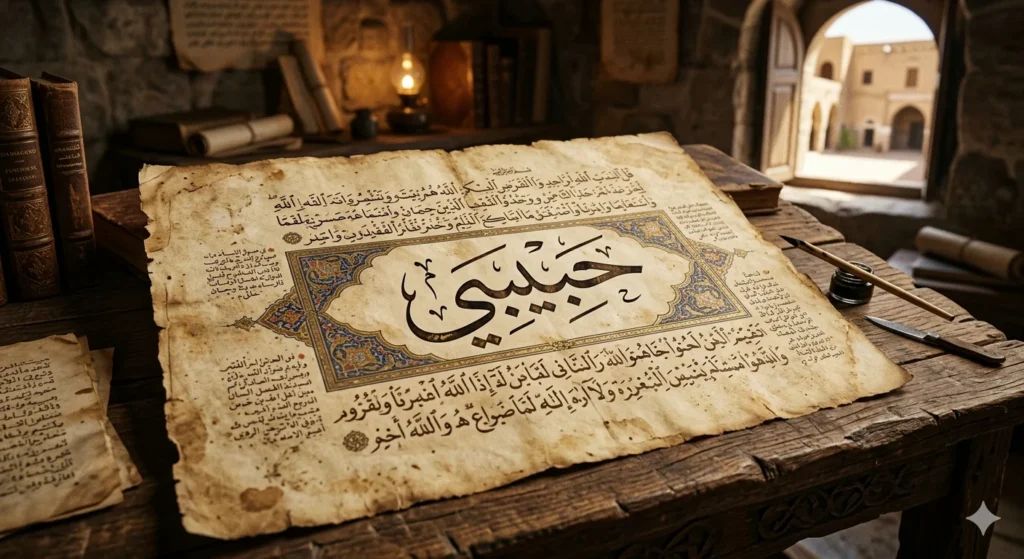
Origin and History of Habibi
The history of habibi stretches back centuries.
Long before social media existed, Arabic poets and writers used words derived from hubb (love) to express affection, admiration, longing, and devotion.
Historical Development
Ancient Arabic Poetry
Early Arab poets frequently used affectionate language derived from the root word hubb.
Classical Arabic Literature
The term appeared in poems, stories, and personal correspondence throughout the Arab world.
Islamic Golden Age
Arabic became one of the world’s leading literary languages, further spreading affectionate expressions such as habibi.
Modern Era
Arabic music, television, and cinema helped introduce the word to global audiences.
Social Media Age
TikTok, Instagram, YouTube Shorts, and travel influencers transformed habibi into a globally recognized expression.
Today, millions of people use the word even if they do not speak Arabic.
Habibi Meaning in Islam
One of the most common questions online is:
“What is the habibi meaning in Islam?”
Is Habibi an Islamic Word?
Not exactly.
Habibi is primarily:
✅ An Arabic word
❌ Not a specifically religious term
Because Arabic is the language of the Quran, many people assume every Arabic expression has a religious meaning. However, habibi is mainly a cultural and linguistic term used to express affection.
Why Do Muslims Say Habibi?
Many Muslims use habibi because:
- Arabic is widely spoken in Muslim communities.
- The word expresses kindness and affection.
- It is common in daily conversation.
- It has been part of Arabic culture for centuries.
Is Saying Habibi Allowed in Islam?
Yes.
There is nothing inherently inappropriate about using the word respectfully with family, friends, or loved ones.
The term itself simply conveys warmth and affection.
Habibi Meaning in Pakistan
Over the last decade, the word habibi has become increasingly popular in Pakistan.
Why Is Habibi Popular in Pakistan?
Several factors contributed to its popularity:
- Islamic educational content
- Arabic language influence
- Gulf countries and overseas workers
- Social media trends
- Arabic songs and travel content
- TikTok and Instagram reels
Habibi Meaning in Pakistan
Most Pakistanis use habibi to mean:
- Mere pyare
- Meri jaan
- Aziz dost
- Dear friend
- Beloved person
Today, phrases such as:
- Ya habibi
- Wallah habibi
- Shukran habibi
are commonly seen across Pakistani social media platforms.
Tralalero Tralala Meaning: The Real Story Behind This Viral Phrase
Is Habibi for Male or Female?
This is one of the biggest misunderstandings among non-Arabic speakers.
Habibi Is Traditionally Used for Males
If you are addressing a male, the correct word is:
Habibi (حبيبي)
Meaning:
“My dear” or “my beloved.”
Habibti Is Used for Females
If you are addressing a female, the correct word is:
Habibti (حبيبتي)
Meaning:
“My dear” or “my beloved” (female).
Quick Comparison
| Word | Used For |
|---|---|
| Habibi | Male |
| Habibti | Female |
Many non-native speakers use habibi universally, but native Arabic speakers typically maintain this distinction.
Habibi vs Habibti: What’s the Difference?
Understanding the difference between these words can help you use Arabic expressions more naturally.
| Phrase | Meaning | Gender |
|---|---|---|
| Habibi | My beloved | Male |
| Habibti | My beloved | Female |
| Habib | Beloved | Male noun |
| Habiba | Beloved woman | Female noun |
Easy Rule
Talking to a man?
→ Use Habibi
Talking to a woman?
→ Use Habibti
This small distinction is important in proper Arabic communication.
Habibi Meaning to a Boy
One of the most searched questions online is “Habibi meaning to a boy.”
When someone says habibi to a boy or man, the meaning depends on the relationship between the two people.
Possible meanings include:
- My dear
- My friend
- My brother
- My beloved
- My love
In many Arabic-speaking countries, male friends frequently call each other habibi without any romantic intention.
Example
Ahmed: Thanks for helping me move today, habibi.
Omar: Anytime, brother.
Here, habibi means “my friend” or “my dear friend.”
However, in a romantic relationship, the same word may mean:
- My love
- My darling
- My beloved
This flexibility is one reason why habibi is such a widely used Arabic expression.
Habibi Meaning to a Girl
Many non-Arabic speakers wonder whether habibi can be used for women.
Technically, standard Arabic uses habibti (حبيبتي) when speaking to a female.
Habibi Meaning to a Girl
When someone calls a girl habibi, they usually intend to mean:
- My love
- My dear
- Sweetheart
- Darling
Although people on social media often use habibi for everyone, native Arabic speakers generally prefer:
Habibti = Female
Habibi = Male
Example
Correct:
“Good morning, habibti.”
Common online version:
“Good morning, habibi.”
Both are understood, but the first follows traditional Arabic grammar.
What Does Habibi Mean to a Guy?
The answer depends on the context.
If a guy hears someone call him habibi, it may mean:
Friendship
- My friend
- My bro
- My dear friend
Family Affection
- My son
- My dear child
- My beloved family member
Romantic Affection
- My love
- My darling
- My sweetheart
Therefore, there is no single universal meaning.
The relationship between the speakers determines how the word should be interpreted.
What Does OFC Mean in Text? You’re Using It Wrong!
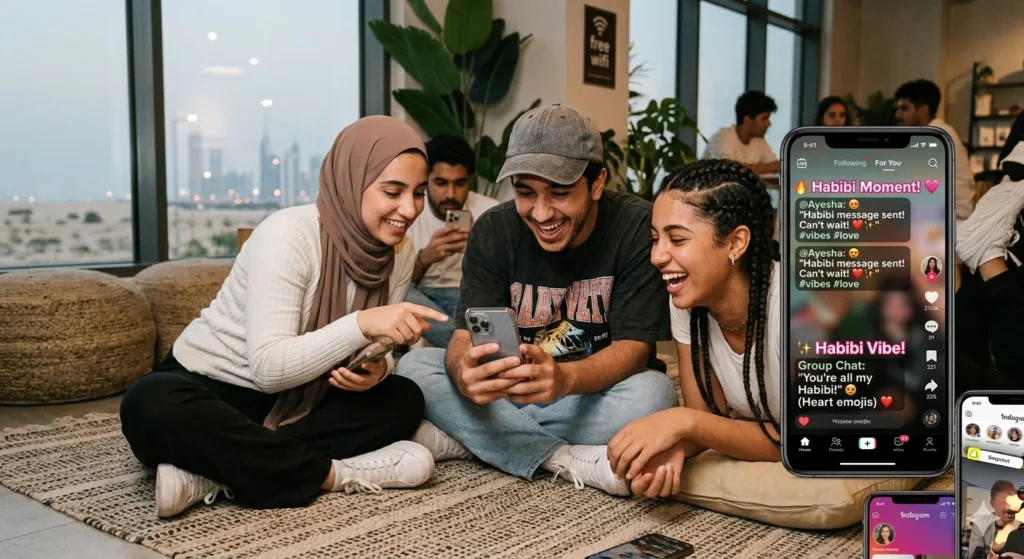
Habibi Meaning Friend
A common misconception is that habibi only means “my love.”
In reality, habibi meaning friend is completely correct in many situations.
Throughout the Arab world, close friends frequently address one another as habibi.
Example
Ali:
“Thank you for your help, habibi.”
Khalid:
“No problem.”
In this conversation, habibi simply means:
- My friend
- My brother
- My dear friend
rather than a romantic partner.
This is one of the reasons the word is considered so versatile.
Is Saying Habibi Flirting?
This is one of Google’s most frequently searched questions.
The Short Answer
Sometimes.
But not always.
When Habibi Is Flirting
If someone says:
- I miss you, habibi.
- Goodnight, habibi ❤️
- You’re beautiful, habibi.
the word may indicate romantic feelings.
When Habibi Is Not Flirting
Among friends and family members, habibi is often completely platonic.
Examples:
- Thank you, habibi.
- Welcome, habibi.
- How are you, habibi?
These examples are friendly rather than romantic.
Key Takeaway
Habibi is an affectionate term, but context determines whether it is romantic or platonic.
Can a Girl Call a Boy Habibi?
Yes.
A girl can absolutely call a boy habibi.
Depending on the relationship, it may communicate:
- Friendship
- Affection
- Admiration
- Romantic interest
- Emotional closeness
Examples
- Thank you, habibi.
- I hope you’re okay, habibi.
- Goodnight, habibi.
Many women use the term naturally when speaking to close friends, brothers, husbands, fiancés, or boyfriends.
Habibi Meaning Slang
In modern internet culture, habibi has evolved into a global slang term.
Habibi Meaning Slang
On social media, habibi often means:
- Best friend
- Favorite person
- Bro
- Buddy
- Someone you care about
Social Media Examples
- “Come here, habibi!”
- “That’s my habibi.”
- “Habibi, let’s go!”
Today, many people use the word casually even if they do not speak Arabic.
This modern slang usage helped make the term popular worldwide.
Why Do Muslims Say Habibi?
Another common question is:
“Why do Muslims say habibi?”
The answer is simple.
Muslims use habibi because it is a common Arabic expression of affection.
Reasons Muslims Use Habibi
- Arabic is spoken in many Muslim countries.
- It expresses kindness and warmth.
- It is culturally familiar.
- It is commonly used among family and friends.
Important Clarification
Habibi is:
✅ Arabic
❌ Not specifically Islamic
People of various religions who speak Arabic may also use habibi.
Ya Habibi Meaning
One of the most famous Arabic expressions is:
Ya Habibi (يا حبيبي)
What Does Ya Habibi Mean?
The word Ya means:
- Oh
- O
Therefore:
Ya Habibi
means:
“Oh my love”
or
“Oh my dear.”
Why Is It Popular?
The phrase appears frequently in:
- Arabic songs
- Poetry
- Romantic messages
- Movies
Example
“Come back to me, ya habibi.”
The expression often sounds more emotional and dramatic than simply saying habibi.
Yalla Habibi Meaning
Another popular phrase is:
Yalla Habibi
What Does Yalla Mean?
Yalla means:
- Let’s go
- Come on
- Hurry up
Yalla Habibi Meaning
Combined together, the phrase means:
- Come on, my dear!
- Let’s go, my friend!
- Hurry up, my love!
Example
“Yalla habibi, we’re late.”
This phrase is extremely common throughout the Middle East.
Habibi vs Habibti vs Ya Habibi vs Yalla Habibi
Understanding these phrases helps avoid confusion.
| Phrase | Meaning | Typical Usage |
|---|---|---|
| Habibi | My dear (male) | Friends, family, romance |
| Habibti | My dear (female) | Friends, family, romance |
| Ya Habibi | Oh my love | Songs and emotional speech |
| Yalla Habibi | Come on, my dear | Daily conversation |
Each phrase has a different purpose, even though they all contain the word habibi.
Can Non-Arabs Use Habibi?
Absolutely.
Because of globalization, social media, travel, and music, millions of non-Arabic speakers use habibi today.
Best Practices
If you choose to use the word:
✅ Understand its meaning
✅ Use it respectfully
✅ Be aware of cultural context
Avoid using it excessively or in professional situations where formal language is more appropriate.
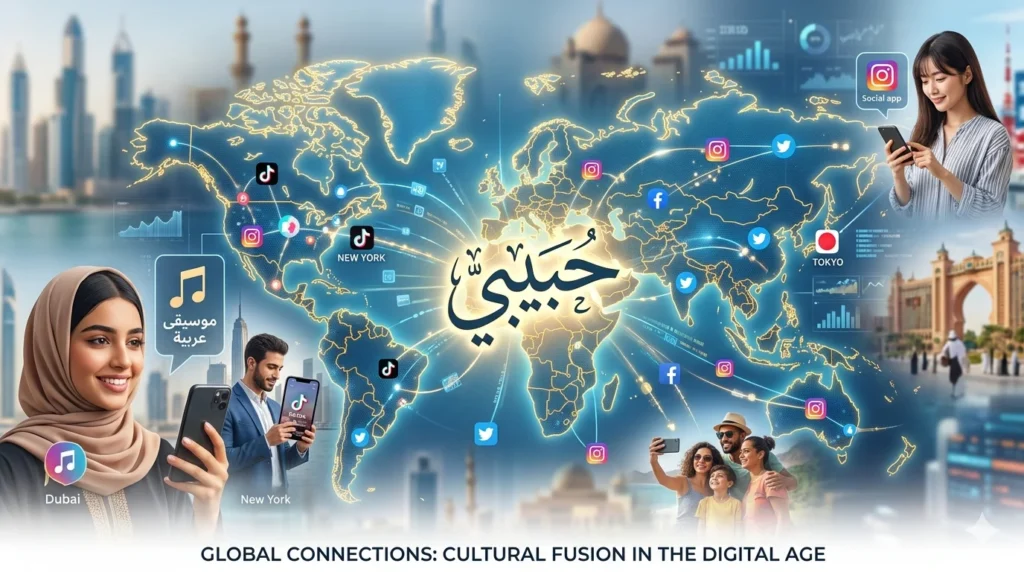
How Habibi Became Popular Worldwide
Although habibi has existed for centuries, social media transformed it into a global phenomenon.
Arabic Music
Many internationally successful Arabic songs include the phrase ya habibi.
Dubai Travel Content
Travel influencers frequently use Arabic phrases when visiting Gulf countries.
TikTok Trends
Short-form videos introduced millions of people to the word.
Internet Memes
Funny videos and memes helped spread expressions such as:
- Yalla Habibi
- Wallah Habibi
- Hamood Habibi
Today, habibi is recognized far beyond the Arabic-speaking world.
Key Takeaways
- Habibi means “my love,” “my dear,” or “my beloved.”
- The word comes from the Arabic root “hubb,” meaning love.
- Habibi is traditionally used for males.
- Habibti is traditionally used for females.
- The term can be romantic or platonic.
- Friends, family members, and couples all use it.
- Popular variations include Ya Habibi and Yalla Habibi.
- The word is widely used across social media and modern internet culture.
Wallah Habibi Meaning
One of the most common phrases you may hear in Arabic conversations is “Wallah Habibi.”
What Does Wallah Mean?
Wallah (والله) literally means:
“By God” or “I swear to God.”
It is often used to emphasize honesty, sincerity, or strong feelings.
Wallah Habibi Meaning
When combined with habibi, the phrase can mean:
- I swear, my friend.
- Honestly, my dear.
- Believe me, my love.
- I promise, my brother.
Example
Wallah habibi, I’m telling the truth.
In this sentence, the speaker is emphasizing sincerity while addressing someone affectionately.
Shukran Habibi Meaning
Another extremely common expression is:
Shukran Habibi
What Does Shukran Mean?
Shukran (شكراً) means:
“Thank you.”
Shukran Habibi Meaning
Combined together, the phrase means:
- Thank you, my dear.
- Thanks, my friend.
- Thank you, my beloved.
Example
Shukran habibi for helping me today.
This phrase is widely used throughout the Arab world and among people learning Arabic.
Mashallah Habibi Meaning
What Does Mashallah Mean?
Mashallah (ما شاء الله) means:
“What God has willed.”
It is commonly used when expressing admiration, appreciation, or happiness for someone’s achievements or blessings.
Mashallah Habibi Meaning
Possible translations include:
- Wonderful, my dear.
- God bless you, my friend.
- Beautiful, my beloved.
Example
Mashallah habibi, you did an excellent job.
The phrase combines admiration with affection.
Inshallah Habibi Meaning
What Does Inshallah Mean?
Inshallah (إن شاء الله) means:
“God willing.”
It is used when discussing future plans or hopes.
Inshallah Habibi Meaning
The phrase may be translated as:
- God willing, my dear.
- Hopefully, my friend.
- If God wills, my beloved.
Example
Inshallah habibi, we’ll meet again soon.
This expression is common across many Arabic-speaking communities.
Marhaba Habibi Meaning
What Does Marhaba Mean?
Marhaba (مرحبا) means:
- Hello
- Welcome
Marhaba Habibi Meaning
Combined together, the phrase means:
- Hello, my dear.
- Welcome, my friend.
- Greetings, my beloved.
Example
Marhaba habibi! How are you today?
This phrase creates an especially warm and friendly greeting.
Helwa Habibi Meaning
What Does Helwa Mean?
Helwa (حلوة) generally means:
- Beautiful
- Sweet
- Lovely
- Nice
Helwa Habibi Meaning
Depending on context, it may mean:
- Beautiful, my dear.
- Lovely, my beloved.
- Sweet one, my friend.
Example
Helwa habibi, that’s a wonderful idea.
The phrase is often used as a compliment.
Hamood Habibi Meaning
One phrase that became famous online is:
Hamood Habibi.
What Does It Mean?
Hamood is a male name.
Habibi means my dear or my beloved.
Together, the phrase literally means:
“Hamood, my dear.”
Why Is It Popular?
The phrase became a viral meme and internet trend through humorous videos and social media content.
Today, many people recognize Hamood Habibi even without understanding Arabic.
Al Habibi Meaning
Many users search for “Al Habibi meaning.”
What Does Al Mean?
In Arabic, “Al” means:
“The.”
Al Habibi Meaning
When used in names or business titles, “Al Habibi” generally retains the core meaning associated with habibi:
- The beloved
- The dear one
- The loved one
In many cases, Al Habibi may simply be part of a surname, brand name, restaurant name, or company name rather than a complete phrase.
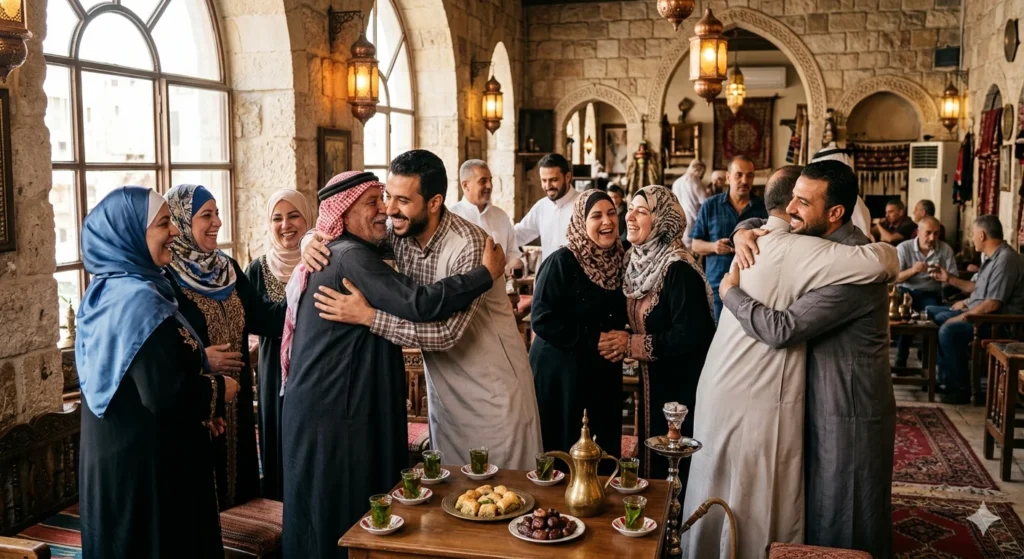
Real-Life Examples of Habibi in Conversations
Example 1: Friends
Ali:
“Thanks for helping me move, habibi.”
Omar:
“No problem.”
Meaning:
“My friend” or “my dear friend.”
Example 2: Parent and Child
Mother:
“Come eat dinner, habibi.”
Son:
“Okay, Mom.”
Meaning:
“My dear child.”
Example 3: Romantic Relationship
Sara:
“I miss you, habibi.”
Ahmed:
“I miss you too.”
Meaning:
“My love.”
Example 4: Greeting
Khalid:
“Marhaba habibi!”
Yousef:
“Marhaba!”
Meaning:
“Hello, my friend.”
Example 5: Appreciation
Fatima:
“Shukran habibi.”
Amina:
“You’re welcome.”
Meaning:
“Thank you, my dear.”
Common Mistakes When Using Habibi
Even though the word is simple, many learners make mistakes.
1. Using Habibi for Everyone
Traditional Arabic distinguishes between:
- Habibi (male)
- Habibti (female)
2. Assuming It Is Always Romantic
Habibi is often used between:
- Friends
- Family members
- Parents and children
It does not automatically imply romance.
3. Using It in Professional Communication
Avoid writing:
“Dear client, thank you, habibi.”
Instead use professional language in business settings.
4. Ignoring Cultural Context
Understanding how native speakers use the term helps avoid misunderstandings.
5. Overusing the Word
Repeatedly calling everyone habibi may sound unnatural.
Moderation is best.
Frequently Asked Questions
What does habibi mean in English?
Habibi usually means “my love,” “my dear,” “my beloved,” or “my darling.”
What does habibi mean in Arabic?
In Arabic, habibi (حبيبي) literally means “my beloved.”
Is habibi for male or female?
Habibi is traditionally used for males, while habibti is used for females.
What does habibi mean to a guy?
It can mean my friend, my dear, my brother, or my love depending on the context.
What does habibi mean to a girl?
The intended meaning is usually my dear or my love, although the correct feminine form is habibti.
Is saying habibi flirting?
Sometimes. It can be romantic or simply friendly depending on the relationship.
Why do Muslims say habibi?
Because it is a common Arabic expression of affection and friendliness.
What does yalla habibi mean?
It means “Come on, my dear” or “Let’s go, my friend.”
What does wallah habibi mean?
It means “I swear, my dear” or “Honestly, my friend.”
Can non-Arabs use habibi?
Yes. Many non-Arabic speakers use the word respectfully in everyday conversation and online culture.
Conclusion
The word habibi is one of the most beautiful and widely recognized expressions in the Arabic language. While it is commonly translated as “my love” or “my dear,” its true meaning goes much deeper. Habibi represents affection, friendship, warmth, respect, and emotional connection. It can be used between friends, family members, children, and romantic partners, making it one of the most versatile Arabic terms of endearment.
Over time, habibi has expanded beyond the Arab world and become a global cultural expression through music, movies, social media, travel content, and internet trends. Whether you encounter phrases like ya habibi, yalla habibi, wallah habibi, or shukran habibi, understanding the meaning behind these expressions helps you appreciate the rich cultural heritage they come from.
Now that you know the complete meaning, origin, pronunciation, and usage of habibi, you’ll be able to recognize and use this popular Arabic expression with confidence and respect.

Dolly Parton is a professional content writer at maeningg.com, specializing in clear, engaging, and well-researched digital content. With strong expertise in writing about text slang, meanings, lifestyle, and informative articles, Dolly focuses on helping readers understand internet language in a simple and relatable way.