Why Do Some People Always Seem Prepared While Others Constantly Feel Behind?
Have you ever noticed that some people spot problems before they happen, meet deadlines without panic, and seem to stay one step ahead no matter what life throws at them? It’s not luck, talent, or perfect timing. More often than not, it comes down to one powerful habit: being proactive.
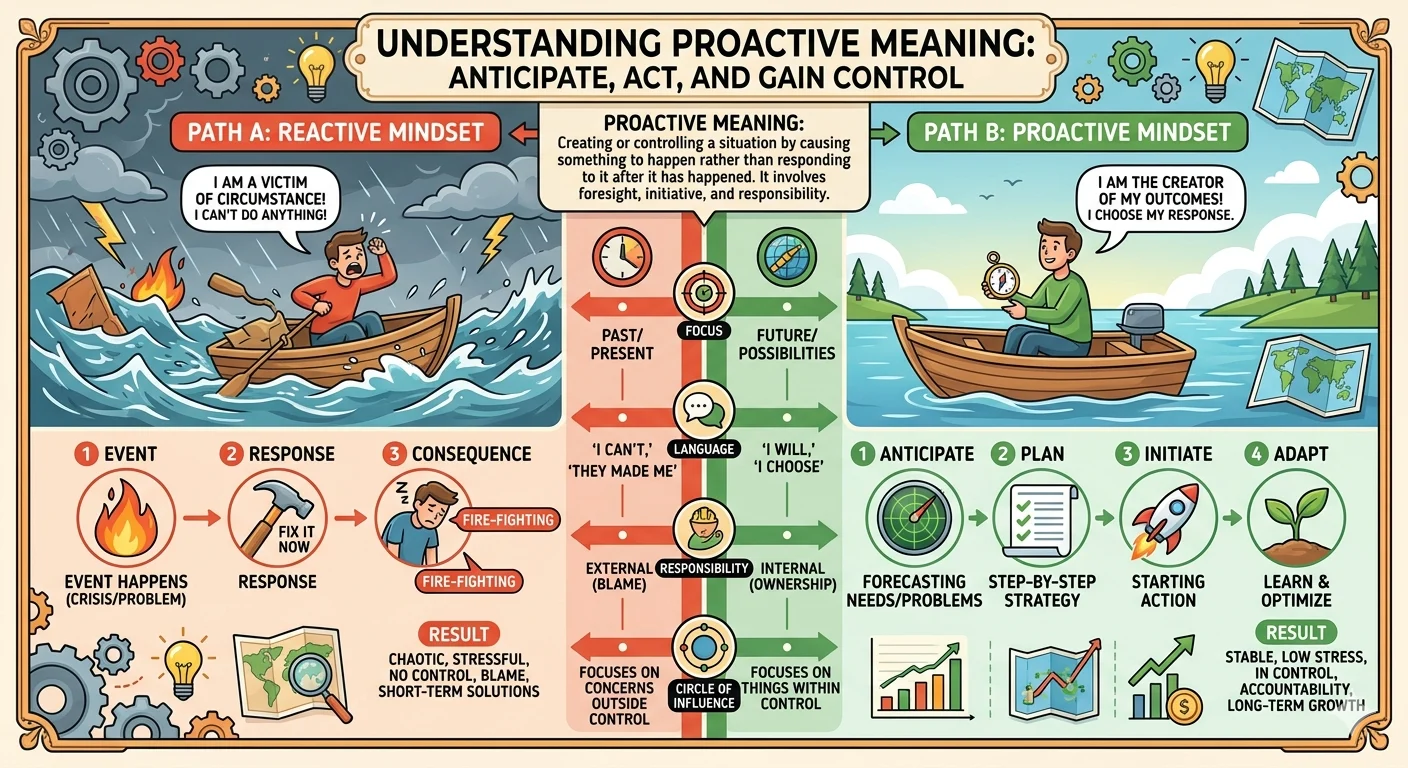
The proactive meaning is taking initiative before a situation forces you to react. Rather than waiting for challenges to appear, proactive people anticipate what might happen and take action early. This helps them avoid unnecessary stress, make better decisions, and create opportunities others often miss.
Whether it’s preparing for an important meeting, studying before an exam, or solving a small issue before it becomes a major problem, being proactive puts you in control instead of leaving you constantly playing catch-up.
Proactive means taking initiative and acting before problems arise rather than waiting to respond after they happen. A proactive person thinks ahead, plans for the future, identifies opportunities, and takes responsibility for outcomes.
Example:
- Proactive: Studying regularly before an exam.
- Reactive: Waiting until the night before the exam to start studying.
Proactive Meaning in Simple Words
If you’re looking for the proactive meaning in simple language, here’s the easiest explanation:
Being proactive means thinking ahead and taking action early.
Instead of waiting for something bad to happen, proactive people prepare in advance.
For example:
- Packing your work bag the night before
- Saving money for emergencies
- Scheduling regular health checkups
- Solving small problems before they become big ones
In simple terms, proactive people don’t just react to life—they actively shape it.
Origin and History of the Word Proactive
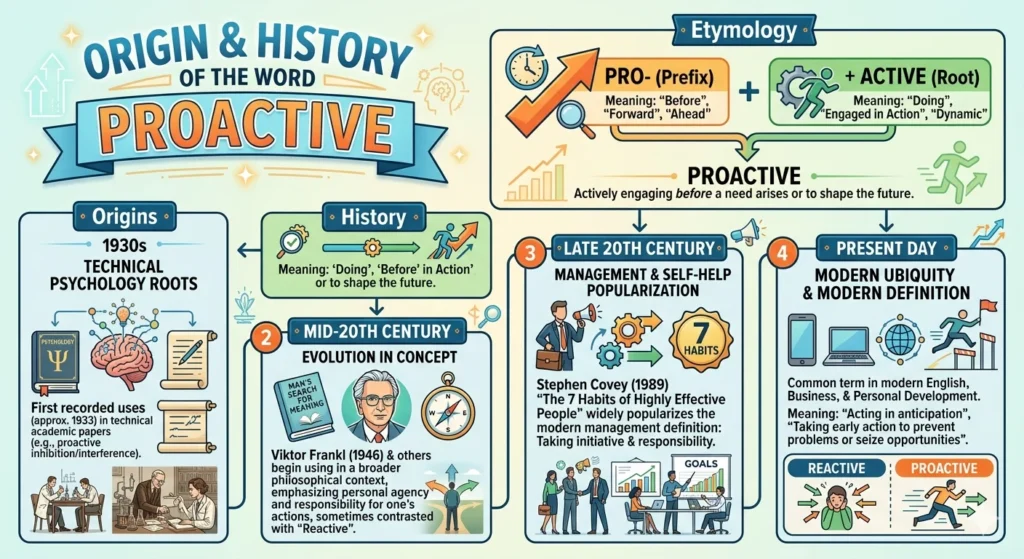
The word proactive became popular in psychology and personal development during the twentieth century.
Its roots come from:
- “Pro” meaning before or forward
- “Active” meaning taking action
The concept gained worldwide recognition through psychiatrist Viktor Frankl, who emphasized the importance of choosing our responses rather than allowing circumstances to control us.
Later, Stephen R. Covey popularized the term in his bestselling book The 7 Habits of Highly Effective People. The first habit, “Be Proactive,” encouraged people to focus on what they can control and influence rather than blaming external factors.
Today, proactive thinking is widely taught in leadership training, education, business management, healthcare, and personal development programs.
What Is Meant by Being Proactive?
Many people search, “What is meant by being proactive?”
Being proactive means:
- Taking responsibility for your actions
- Planning ahead
- Anticipating challenges
- Looking for solutions before problems grow
- Creating opportunities instead of waiting for them
A proactive mindset focuses on influence, preparation, and initiative.
Rather than asking:
“What if something goes wrong?”
A proactive person asks:
“What can I do now to prevent future problems?”
Proactive Person Meaning
A proactive person is someone who takes initiative without waiting to be told what to do.
Common characteristics include:
- Self-motivation
- Responsibility
- Good planning skills
- Strong decision-making
- Problem-solving ability
- Forward thinking
- Accountability
For example, a proactive employee may identify a process improvement and suggest it before management notices a problem.
Similarly, a proactive student studies consistently instead of waiting until the last minute.
Proactive Meaning in Business
Proactive meaning in business refers to anticipating problems, opportunities, and market changes before they occur.
Organizations value proactive employees because they:
- Solve issues early
- Improve productivity
- Reduce risks
- Save time and resources
- Strengthen customer relationships
Example:
Instead of waiting for customer complaints, a proactive business gathers feedback regularly and improves services before dissatisfaction grows.
What Does It Mean to Work Proactively?
Working proactively means:
- Planning tasks in advance
- Identifying potential obstacles
- Communicating early
- Taking initiative
- Finding solutions before problems escalate
This is one reason proactive employees are often viewed as future leaders.

Proactive Meaning in a Relationship
Proactive meaning in a relationship involves actively maintaining and strengthening the relationship before major issues appear.
Examples include:
- Communicating openly
- Discussing concerns early
- Planning quality time together
- Showing appreciation regularly
- Addressing misunderstandings before they become conflicts
A proactive partner focuses on prevention rather than damage control.
Healthy relationships often depend on proactive communication and mutual effort.
Proactive Meaning in Medical and Healthcare Settings
Proactive meaning in medical care refers to preventing health problems before they develop.
Examples include:
- Preventive screenings
- Vaccinations
- Regular exercise
- Healthy eating habits
- Routine checkups
Doctors often encourage a proactive approach because prevention is usually more effective and less costly than treatment.
A proactive healthcare strategy helps people maintain long-term well-being and reduce health risks.
What Does AFAB Mean? Hidden Meaning Explained Simply
Proactive Meaning for Kids
Children can also learn proactive habits.
For kids, proactive means:
- Thinking ahead
- Making responsible choices
- Planning before problems happen
Examples:
- Finishing homework before playing games
- Packing school supplies the night before
- Saving part of their allowance
Teaching children proactive behavior helps develop confidence, responsibility, and independence.
Reactive vs Proactive Meaning
One of the most common searches is “reactive vs proactive meaning.”
Although they are related, they represent opposite approaches.
| Proactive | Reactive |
|---|---|
| Acts before problems occur | Responds after problems occur |
| Plans ahead | Waits until action is necessary |
| Prevents issues | Fixes issues |
| Creates opportunities | Responds to circumstances |
| Focuses on preparation | Focuses on response |
Example
Proactive:
A company updates cybersecurity systems before a threat appears.
Reactive:
A company upgrades security only after a data breach.
Both approaches have value, but proactive behavior often reduces risk and improves outcomes.
Active vs Proactive Meaning
Many people also search for active vs proactive meaning.
Being active means doing something.
Being proactive means doing something in advance to achieve a desired future result.
Example:
Active:
Completing assigned tasks.
Proactive:
Identifying future improvements before being asked.
Proactive behavior requires foresight, while active behavior simply requires action.
Opposite of Proactive Meaning
The opposite of proactive is reactive.
A reactive person waits until a situation develops before taking action.
For example:
- Waiting for a deadline before starting work
- Ignoring maintenance until equipment breaks
- Addressing relationship problems only after conflict occurs
While reactive actions are sometimes necessary, relying on them too often can create unnecessary stress and challenges.
Proactive Meaning Synonyms
People often search for proactive meaning synonyms.
Common synonyms include:
- Forward-thinking
- Prepared
- Anticipatory
- Preventive
- Strategic
- Self-starting
- Initiative-taking
- Resourceful
Although these words are related, proactive specifically emphasizes acting before problems arise.
What Does YNS Mean in Text? Hidden Slang Revealed
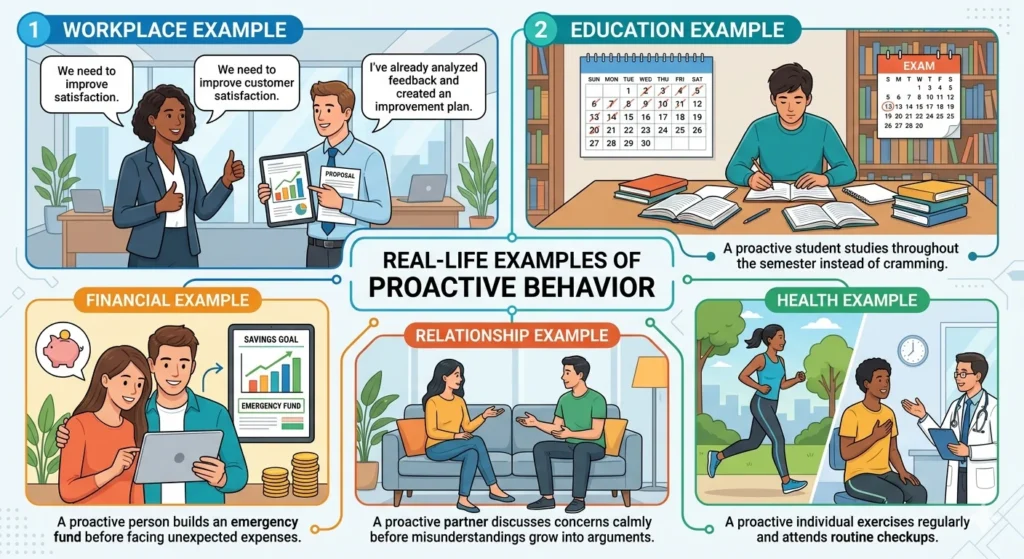
Real-Life Examples of Proactive Behavior
Workplace Example
Manager:
“We need to improve customer satisfaction.”
Employee:
“I’ve already analyzed feedback and created an improvement plan.”
Manager:
“That’s a proactive approach.”
Education Example
A proactive student studies throughout the semester instead of cramming before exams.
Financial Example
A proactive person builds an emergency fund before facing unexpected expenses.
Health Example
A proactive individual exercises regularly and attends routine checkups.
Relationship Example
A proactive partner discusses concerns calmly before misunderstandings grow into arguments.
Benefits of Being Proactive
Being proactive offers many advantages.
Better Problem Prevention
Potential issues are identified early.
Reduced Stress
Planning ahead minimizes last-minute pressure.
Improved Productivity
Tasks are completed more efficiently.
Stronger Relationships
Communication improves trust and understanding.
Greater Career Success
Employers often reward initiative and leadership.
Increased Confidence
Preparation helps people feel more capable and in control.
How to Become More Proactive
Anyone can develop proactive habits.
1. Plan Ahead
Think about future responsibilities and prepare early.
2. Set Clear Goals
Goals create direction and focus.
3. Anticipate Challenges
Ask yourself:
“What obstacles might I face?”
4. Focus on Solutions
Spend less time worrying and more time solving.
5. Take Responsibility
Accept ownership of decisions and outcomes.
6. Build Consistent Habits
Small proactive actions repeated daily lead to long-term success.
Stay Proactive Meaning
The phrase “stay proactive” means continuing to think ahead and take initiative even when things are going well.
It encourages people to:
- Keep preparing
- Keep learning
- Keep improving
- Keep solving problems early
In business and personal development, staying proactive is often seen as a key habit of successful individuals.
Thank You for Being Proactive Meaning
When someone says, “Thank you for being proactive,” they are expressing appreciation for your initiative and forward-thinking actions.
It usually means:
- You anticipated a need
- You solved a problem early
- You took responsibility without being asked
This phrase is commonly used in professional environments.
Not Proactive Meaning
Not proactive meaning refers to failing to plan ahead or take initiative.
Someone who is not proactive may:
- Delay important tasks
- Wait for instructions
- React only after problems appear
Being occasionally reactive is normal, but consistently avoiding proactive behavior can create challenges over time.
Proactive Meaning in Arabic
Proactive meaning in Arabic is often translated as:
استباقي
This refers to taking initiative and acting before events unfold.
Proactive Meaning in Farsi
Proactive meaning in Farsi is commonly expressed as:
پیشفعال
or
پیشگیرانه
depending on context.
It generally describes preventive and forward-thinking action.
Frequently Asked Questions
What is the meaning of proactive?
Proactive means taking action before problems happen instead of reacting afterward.
What is an example of proactive?
Preparing for a meeting in advance rather than waiting until the last minute.
What does it mean to work proactively?
It means anticipating challenges and solving issues before they become major problems.
Is proactive a positive trait?
Yes. It is widely associated with responsibility, leadership, and success.
What is the opposite of proactive?
The opposite of proactive is reactive.
Can proactive behavior be learned?
Yes. Anyone can become more proactive through planning, goal-setting, and consistent habits.
Why is being proactive important?
It helps prevent problems, reduce stress, improve relationships, and achieve better results.
Is proactive the same as productive?
No. Productive means getting things done. Proactive means preparing and acting ahead of time.
Conclusion
The proactive meaning is simple but powerful: taking initiative and acting before problems arise. Whether in business, relationships, education, healthcare, or everyday life, proactive behavior helps people stay prepared, reduce stress, and create better outcomes.
A proactive person plans ahead, accepts responsibility, and focuses on solutions rather than excuses. By developing proactive habits, anyone can improve their decision-making, strengthen relationships, enhance productivity, and achieve greater success.
The next time you hear the phrase “Be proactive,” you’ll know it means taking charge of your future instead of simply reacting to circumstances.

Willie Nelson is a skilled and passionate content writer working as an expert author at maeningg.com. With strong knowledge of digital trends, slang meanings, and engaging online content, Willie focuses on creating clear, helpful, and reader-friendly articles.