
Have you ever heard someone say “C’est la vie” after something unexpected, frustrating, or disappointing happened and wondered what they meant? You’re not alone.
This popular French phrase is often used in everyday conversations, movies, social media posts, and song lyrics, yet many people don’t fully understand its meaning.
C’est la vie is a French expression that means “that’s life.” It is commonly used to accept a situation that cannot be changed, especially when things don’t go as planned.
If it’s a missed opportunity, an unlucky break, or a simple disappointment, people often say “C’est la vie” to acknowledge that life isn’t always perfect and move on. In this guide, you’ll learn the meaning of “C’est la vie,” how to pronounce it, when to use it, real-life examples, and why this simple phrase remains popular around the world.
C’est La Vie Meaning in English
The most accurate c’est la vie meaning in English is:
“That’s life.”
English speakers commonly use the phrase to acknowledge situations that cannot be changed.
For example:
- “I missed my train this morning. C’est la vie.”
- “The concert got canceled because of the weather. C’est la vie.”
- “My phone stopped working right before my trip. C’est la vie.”
In each example, the phrase communicates acceptance rather than frustration.
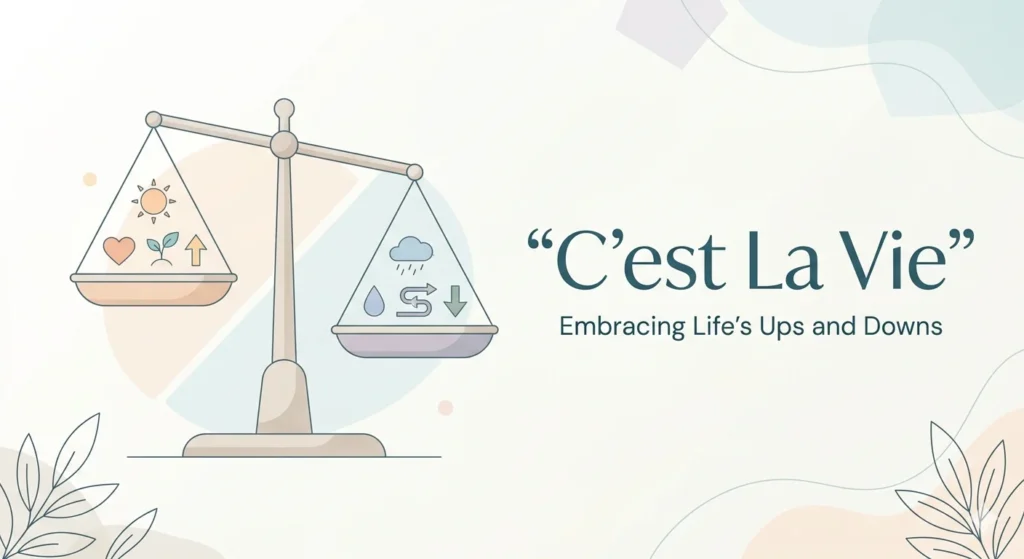
Unlike some expressions that sound negative or pessimistic, “c’est la vie” often carries a surprisingly positive and balanced tone. It recognizes that life isn’t perfect and that challenges are simply part of the human experience.
C Est La Vie Pronunciation
One of the most searched questions online is about C est la vie pronunciation.
The correct pronunciation is:
Say Lah Vee
Phonetic spelling:
/seɪ lɑː viː/
Pronunciation Breakdown
| French Word | Pronunciation |
|---|---|
| C’est | Say |
| La | Lah |
| Vie | Vee |
When spoken naturally:
Say Lah Vee
Many beginners incorrectly pronounce it as:
❌ Sest La Vie
❌ See-est La Vie
❌ Kest La Vie
The correct pronunciation is smooth and flows naturally.
Origin and History of C’est La Vie
The phrase originates from the French language and has been used for centuries as a common expression of acceptance.
French speakers traditionally used it to acknowledge that life is unpredictable and that some situations are beyond human control.
Over time, the phrase spread beyond France through:
- Literature
- Art
- International travel
- Movies
- Television
- Music
- Popular culture
Today, millions of people use the expression without speaking French fluently.
Its popularity comes from its universal message: every person experiences setbacks, disappointments, and unexpected changes.
No matter where you live, the idea behind “c’est la vie” is easy to understand.
Why Is C’est La Vie So Popular?
Unlike many foreign expressions, “c’est la vie” became popular internationally because it captures a feeling that almost everyone experiences.
People use it because it:
- Sounds elegant
- Is easy to remember
- Has a positive message
- Helps reduce stress
- Encourages acceptance
- Reflects emotional maturity
The phrase offers a healthier perspective on everyday frustrations.
Instead of asking:
“Why did this happen to me?”
It suggests:
“This happened. Now let’s move forward.”
That simple mindset shift explains why the phrase remains popular across generations.
Is “C’est La Vie” a Positive Saying?
A very common question is:
Is “c’est la vie” a positive saying?
The answer is generally yes.
Although people often use the phrase after something disappointing happens, its overall message is positive because it promotes:
Acceptance
Accepting reality instead of fighting it.
Resilience
Recovering from setbacks and continuing forward.
Perspective
Understanding that challenges are a normal part of life.
Emotional Balance
Responding calmly rather than reacting emotionally.
For example:
Imagine you miss your flight.
Negative response:
“My whole day is ruined!”
C’est la vie response:
“Well, c’est la vie. I’ll catch the next one.”
The second reaction demonstrates a healthier and more balanced outlook.
Is CEST La Vie a Good Thing?
Another frequently asked question is:
Is CEST la vie a good thing?
In most situations, yes.
The phrase promotes a positive mindset because it teaches people to focus on what they can control rather than what they cannot.
Psychologists often discuss the importance of acceptance when dealing with everyday stress.
The philosophy behind “c’est la vie” aligns closely with that idea.
However, context matters.
The phrase works best for:
✅ Minor disappointments
✅ Unexpected inconveniences
✅ Everyday setbacks
✅ Situations beyond your control
It should not be used to dismiss serious problems or avoid responsibility.
For example:
Appropriate:
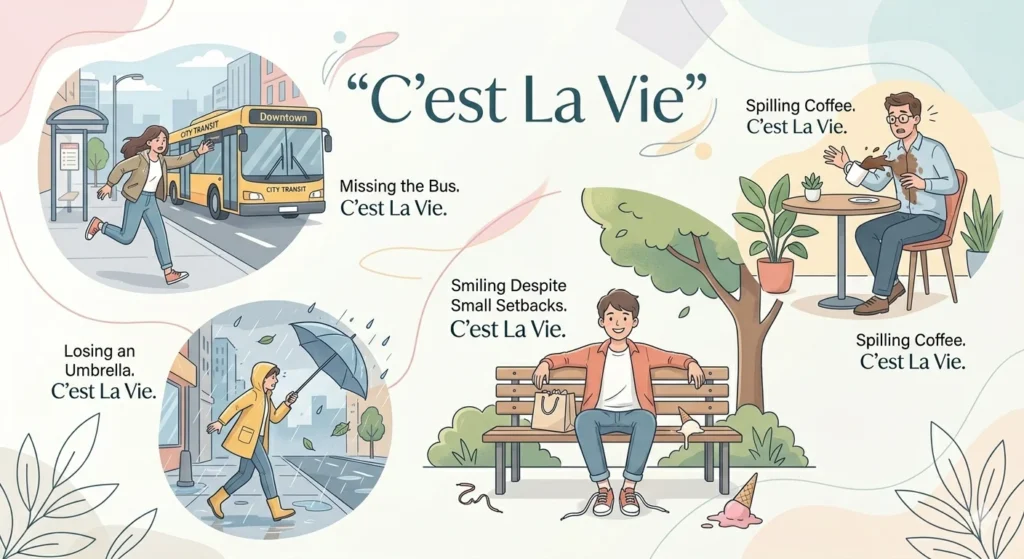
“The picnic got canceled because of rain. C’est la vie.”
Less appropriate:
“I ignored an important deadline. C’est la vie.”
In the second example, accountability is needed rather than acceptance alone.
Why People Say C’est La Vie
People use the phrase in many different situations.
When Plans Change
Example:
“Our vacation was postponed. C’est la vie.”
When Things Go Wrong
Example:
“I spilled coffee on my shirt. C’est la vie.”
When Facing Disappointment
Example:
“I didn’t win the competition. C’est la vie.”
When Accepting Reality
Example:
“Not everything works out as expected. C’est la vie.”
The phrase reminds us that perfection is impossible and that life continues despite temporary setbacks.
Succubus Meaning: The Dark Truth Behind the Myth
C’est La Vie Meaning in Different Contexts
The exact meaning remains the same, but the tone can vary depending on how it is used.
In Everyday Conversations
People often use it after small disappointments.
Example:
“The restaurant was closed when we arrived. C’est la vie.”
On Social Media
The phrase frequently appears in captions.
Example:
“Lost my favorite sunglasses on vacation. C’est la vie.”
Social media users often use it to show humor and acceptance.
In Relationships
The phrase can express acceptance when things do not go as planned.
Example:
“We wanted different things in life. C’est la vie.”
In Humor
Many people use it jokingly.
Example:
“Burned dinner again. C’est la vie.”
In Literature
Authors use the phrase to symbolize life’s unpredictability and human resilience.
C’est La Vie Meaning in Urdu
For Urdu speakers, the closest meanings include:
- یہی زندگی ہے
- زندگی ایسی ہی ہوتی ہے
- یہی دنیا کا طریقہ ہے
- زندگی میں ایسا ہوتا رہتا ہے
These translations capture the spirit of acceptance that the French expression conveys.
However, no direct Urdu translation fully captures the elegance and cultural nuance of the original phrase.
C Est La Vie Meaning Song
Many people search for c est la vie meaning song because the phrase has appeared in numerous songs across different decades and musical genres.
When artists use “c’est la vie” in song lyrics, they usually want to express one or more of the following themes:
- Acceptance of life’s challenges
- Love and heartbreak
- Fate and destiny
- Moving on after disappointment
- Personal growth
- Optimism despite difficulties
The exact meaning depends on the song’s context, but the phrase almost always carries the idea that life includes both good and bad experiences.
In music, “c’est la vie” often becomes a reminder that setbacks, failures, and unexpected events are simply part of the journey.
This emotional depth is one reason why the expression continues to appear in modern songs and classic hits alike.
C Est La Vie Meaning Tattoo
One of the most popular searches is c est la vie meaning tattoo.
The phrase has become a favorite tattoo choice because it represents a powerful life philosophy in just three simple words.
People choose a “C’est La Vie” tattoo to symbolize:
Acceptance
Learning to accept life as it comes.
Strength
Overcoming difficult experiences and moving forward.
Resilience
Recovering from setbacks without giving up.
Personal Growth
Understanding that challenges often lead to valuable lessons.
Freedom
Letting go of things that cannot be controlled.
For many individuals, the tattoo serves as a daily reminder that perfection does not exist and that every experience—good or bad—contributes to personal development.
Because of its elegant appearance and meaningful message, “C’est La Vie” remains one of the most popular French tattoo phrases worldwide.
C Est La Vie Meaning in Spanish
Many users also search for c est la vie meaning in Spanish.
Although there is no exact word-for-word Spanish equivalent that carries the same cultural flavor, several phrases express a similar idea:
Así es la vida
Meaning:
“That’s life.”
This is the closest translation.
Así es
Meaning:
“That’s the way it is.”
La vida sigue
Meaning:
“Life goes on.”
All of these expressions communicate acceptance and perspective when dealing with life’s challenges.
While the wording differs, the emotional message remains remarkably similar.
Bussin Meaning: What It Really Means Explained
L Amour C Est La Vie Meaning
A beautiful variation of the phrase is:
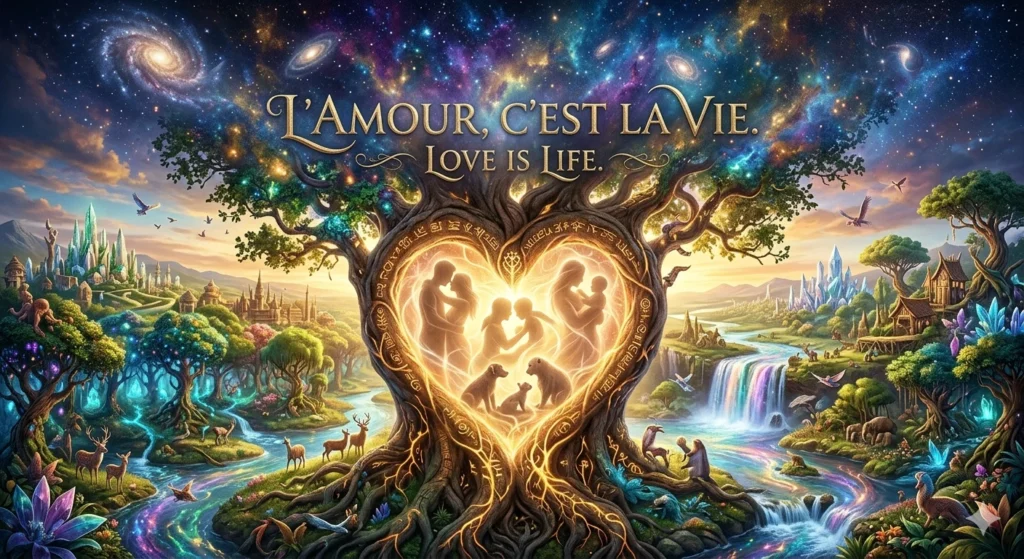
L’amour c’est la vie
The translation is:
“Love is life.”
Breaking it down:
- L’amour = Love
- C’est = Is
- La vie = Life
The phrase suggests that love is one of the most important parts of human existence.
You may see it used in:
- Romantic quotes
- Poetry
- Literature
- Wedding speeches
- Social media captions
- Art and photography
Unlike the standard “c’est la vie,” which focuses on accepting life’s realities, “l’amour c’est la vie” celebrates the importance of love in life.
How to Reply to C’est La Vie
Another common search is c est la vie meaning reply.
When someone says “c’est la vie,” they are usually expressing acceptance, so your reply should match that tone.
Common Replies
- That’s true.
- Life goes on.
- It happens.
- You’re right.
- Better luck next time.
- What can you do?
- That’s just how life works.
Example Conversation
Person A:
“I missed my flight this morning.”
Person B:
“C’est la vie.”
Person A:
“You’re right. I’ll book another one.”
The response works because it acknowledges the situation without creating unnecessary negativity.
C Est La Vie Synonym
Looking for a c est la vie synonym?
Several English expressions share a similar meaning.
| Expression | Meaning |
|---|---|
| That’s life | Direct equivalent |
| It is what it is | Acceptance of reality |
| Such is life | Traditional expression |
| That’s how it goes | Casual acceptance |
| Oh well | Informal response |
| Life goes on | Moving forward |
| What can you do? | Acceptance of circumstances |
| That’s the way the cookie crumbles | Humorous acceptance |
Although each phrase has a slightly different tone, they all express acceptance of situations that cannot be changed.
C’est La Vie vs It Is What It Is
Many people wonder whether these expressions mean the same thing.
C’est La Vie
Tone:
- Softer
- More philosophical
- More optimistic
- Slightly elegant
Meaning:
- Life contains ups and downs.
It Is What It Is
Tone:
- More practical
- More direct
- Sometimes emotionally detached
Meaning:
- Reality cannot be changed.
Example
C’est la vie:
“The weather ruined our picnic, but c’est la vie.”
It is what it is:
“The weather ruined our picnic. It is what it is.”
Both communicate acceptance, but “c’est la vie” often sounds warmer and more reflective.
How Native French Speakers Use C’est La Vie
One common misconception is that only English speakers use the phrase.
In reality, native French speakers use “c’est la vie” regularly in everyday conversation.
In France and other French-speaking regions, people may say it when:
- Plans change unexpectedly
- Minor inconveniences occur
- Life becomes unpredictable
- Someone experiences a disappointment
The phrase is considered natural, conversational, and widely understood.
However, native speakers typically use it in moderation rather than repeating it constantly.
This gives the phrase more impact when it is used.
Cultural Significance of C’est La Vie
The enduring popularity of “c’est la vie” comes from its universal message.
Across cultures, people experience:
- Failure
- Success
- Loss
- Opportunity
- Change
- Uncertainty
The phrase acknowledges these realities without becoming pessimistic.
Instead, it encourages:
Optimism
Believing life will continue.
Resilience
Recovering from setbacks.
Emotional Intelligence
Recognizing what can and cannot be controlled.
Perspective
Understanding that temporary problems do not define an entire life.
These values explain why the expression has remained relevant for generations.
Real-Life Examples of C’est La Vie
Example 1
A:
“My phone broke right before vacation.”
B:
“C’est la vie. At least your photos are backed up.”
Example 2
A:
“I didn’t get the promotion.”
B:
“C’est la vie. Another opportunity will come.”
Example 3
Social Media Caption:
“Lost my luggage but found an amazing beach. C’est la vie.”
Example 4
Humorous Situation:
“Burned dinner, ordered pizza instead. C’est la vie.”
These examples show how the phrase combines acceptance with positivity.
Common Mistakes People Make
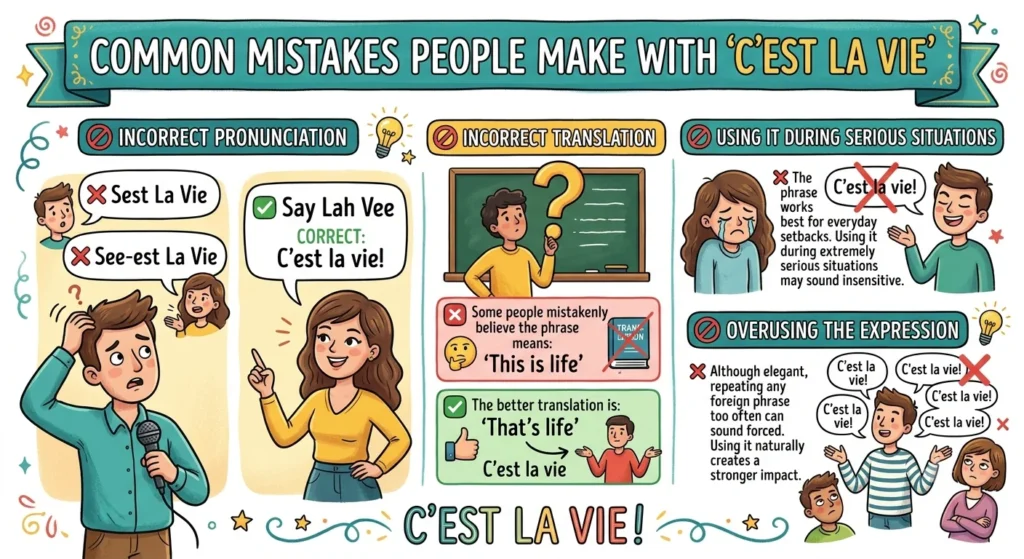
Incorrect Pronunciation
Correct:
✅ Say Lah Vee
Incorrect:
❌ Sest La Vie
❌ See-est La Vie
Incorrect Translation
Some people mistakenly believe the phrase means:
❌ This is life
The better translation is:
✅ That’s life
Using It During Serious Situations
The phrase works best for everyday setbacks.
Using it during extremely serious situations may sound insensitive.
Overusing the Expression
Although elegant, repeating any foreign phrase too often can sound forced.
Using it naturally creates a stronger impact.
Alternative Spellings People Search
Many users search using different spellings, including:
- c’ est la vie meaning
- c ‘est la vie meaning
- c’ est la vie meaning
- c’est la vie meaning
- c est la vie meaning
These searches all refer to the same French expression and carry the same meaning: “That’s life.”
Including these variations helps readers understand that spelling differences do not change the phrase’s definition.
Frequently Asked Questions About C’est La Vie
What does “c’est la vie” literally mean?
Literally, c’est la vie translates to “that’s life” or “such is life.” It is a French expression used to accept situations that cannot be changed.
What is the exact c’est la vie meaning in English?
The exact c’est la vie meaning in English is “that’s life.” People often say it after experiencing a disappointment, inconvenience, or unexpected situation.
Is “c’est la vie” a positive saying?
Yes. While it is usually used after something unfortunate happens, the phrase carries a positive message because it encourages acceptance, resilience, and emotional balance rather than frustration or negativity.
Is CEST la vie a good thing?
In most cases, yes. The phrase reflects a healthy mindset that focuses on moving forward instead of dwelling on problems that cannot be changed.
When should you say “ce la vie”?
You can say c’est la vie when:
- Plans do not work out as expected
- Minor disappointments occur
- Circumstances are beyond your control
- You want to express acceptance and perspective
What is the best reply to “c’est la vie”?
Common replies include:
- That’s true.
- Life goes on.
- It happens.
- You’re right.
- Better luck next time.
- What can you do?
The best response depends on the situation and tone of the conversation.
What does c’est la vie mean in Spanish?
The closest Spanish equivalent is:
“Así es la vida”
which also means “that’s life.”
Other similar Spanish expressions include:
- Así es
- La vida sigue
What does c’est la vie mean in a tattoo?
A C’est La Vie tattoo usually symbolizes:
- Acceptance
- Resilience
- Personal growth
- Strength
- Letting go of what cannot be controlled
Many people choose it as a reminder to embrace life’s challenges with confidence.
What does l’amour c’est la vie mean?
L’amour c’est la vie means:
“Love is life.”
The phrase celebrates the importance of love and emotional connection in human life.
Is c’est la vie used in everyday conversation?
Yes. Both French speakers and English speakers use the phrase in casual conversations, social media captions, literature, music, and everyday communication.
Is c’est la vie formal or informal?
“C’est la vie” is generally considered a casual and conversational expression. While it can appear in literature and creative writing, it is most commonly used in informal settings.
Can c’est la vie be used sarcastically?
Yes. Although the phrase is usually positive, some people use it sarcastically when joking about repeated mistakes or frustrating situations.
Example:
“My internet stopped working during an important meeting. C’est la vie.”
Why is c’est la vie so popular?
The phrase remains popular because its message is universal. Every person experiences setbacks, surprises, and disappointments, making the expression relatable across different cultures and languages.
Conclusion
Life rarely unfolds exactly as planned, and that is precisely why the phrase c’est la vie has remained relevant for centuries. More than a simple French expression, it represents a powerful philosophy of acceptance, resilience, and emotional maturity.
Understanding the true c’est la vie meaning helps us appreciate its deeper message. It reminds us that mistakes happen, opportunities come and go, plans change, and unexpected challenges are a natural part of life. Instead of becoming overwhelmed by every setback, the phrase encourages us to accept reality, learn from our experiences, and continue moving forward.
Whether you encounter the phrase in a song, a conversation, a social media caption, a tattoo, or a piece of literature, its meaning remains timeless. It is a reminder that life is imperfect, unpredictable, and sometimes messy—but it is also full of growth, opportunity, and possibility.
The next time something doesn’t go your way, take a moment, smile, and remember the wisdom behind three simple French words:
C’est la vie — that’s life.

Kris Kristofferson is a professional content writer at maeningg.com, specializing in clear, engaging, and well-researched digital content. With strong expertise in writing about text slang, meanings, lifestyle, and informative articles, Kris focuses on helping readers understand internet language in a simple and relatable way.