Have you ever heard someone talk about having a “strong presence” or being “fully present” and wondered what exactly that means? The word “presence” is used everywhere—from mindfulness talks to social media captions and even business meetings. But its meaning shifts depending on context.
In this guide, you’ll learn:
- The exact definition of presence
- Its origin and evolution
- How it’s used in different contexts (texting, spirituality, business, and communication)
- Real-life examples, related terms, and FAQs
By the end, you’ll clearly understand what “presence” means, how to use it correctly, and why it’s more powerful than you might think.
What Does “Presence” Mean?
Presence means the state or fact of existing, occurring, or being in a particular place.
In everyday use, it often refers to being fully engaged, aware, or noticeable in a situation—physically, emotionally, or energetically.
In short:
“Presence” means being truly there — not just in body, but in attention, focus, and impact.
It’s used across psychology, mindfulness, business, and social settings to describe someone’s awareness or influence.
Origin and Popularity
The word “presence” comes from the Latin term praesentia, meaning “being at hand or in attendance.” It entered Middle English through Old French in the 14th century.
Over time, its meaning evolved:
- 14th–18th centuries: Described physical attendance or being before someone (e.g., “in the presence of the king”).
- 19th–20th centuries: Expanded to mean personal aura or charisma (“She has an incredible stage presence”).
- 21st century: Adopted in psychology and spirituality, emphasizing mindfulness and living in the moment.
Today, “presence” is popular in leadership, self-development, and digital spaces—often linked to authenticity and influence.
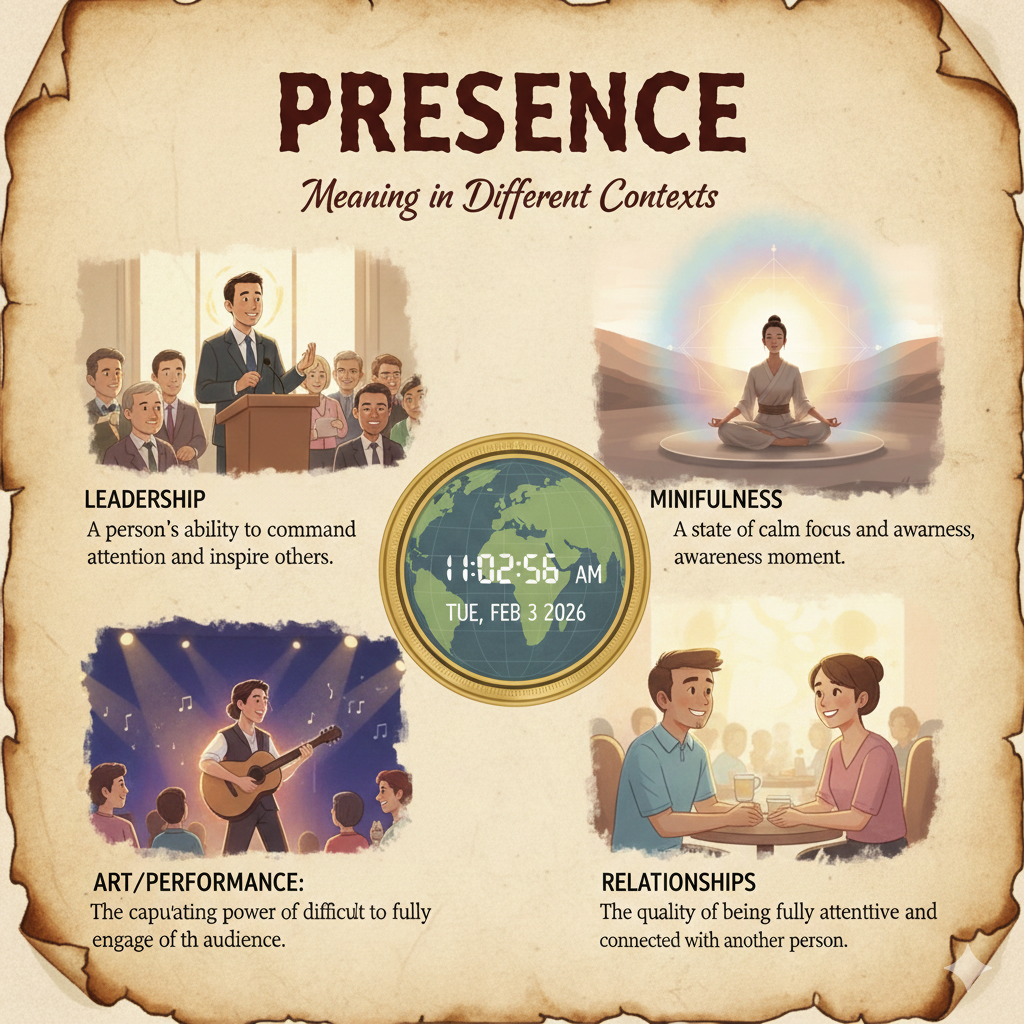
Presence Meaning in Different Contexts
1. In Texting or Social Media
When people mention “presence” online, they often mean availability or online status—for example, your green dot on Instagram, WhatsApp, or Teams.
- “Your presence is showing online.”
- “He turned off his presence status.”
Here, it’s a technical term describing digital availability.
2. In Spiritual or Mindfulness Contexts
In meditation and psychology, presence means being fully aware and attentive to the current moment—without distraction or judgment.
It’s the opposite of being on autopilot.
- Example: “Meditation helps increase your sense of presence.”
- Related phrases: mindful presence, being present, inner stillness.
3. In Business or Leadership
In a corporate setting, presence often refers to executive presence—the combination of confidence, communication, and credibility that inspires respect.
- Example: “She has the presence of a true leader.”
It’s about how you carry yourself, the energy you project, and how others perceive you in professional environments.
4. In Everyday Conversation
In casual language, saying someone has “a presence” means they stand out naturally—through confidence, kindness, or charisma.
- Example: “He doesn’t speak much, but his presence fills the room.”
📊 Quick Comparison Table
| Context | Meaning of Presence | Example Use |
| Texting / Online | Status or availability | “My presence shows active on Teams.” |
| Spiritual / Mindfulness | Awareness and being in the moment | “Stay present during meditation.” |
| Business / Leadership | Confidence and professional aura | “She has great executive presence.” |
| Everyday / Social | Personal charisma or vibe | “He has a calming presence.” |
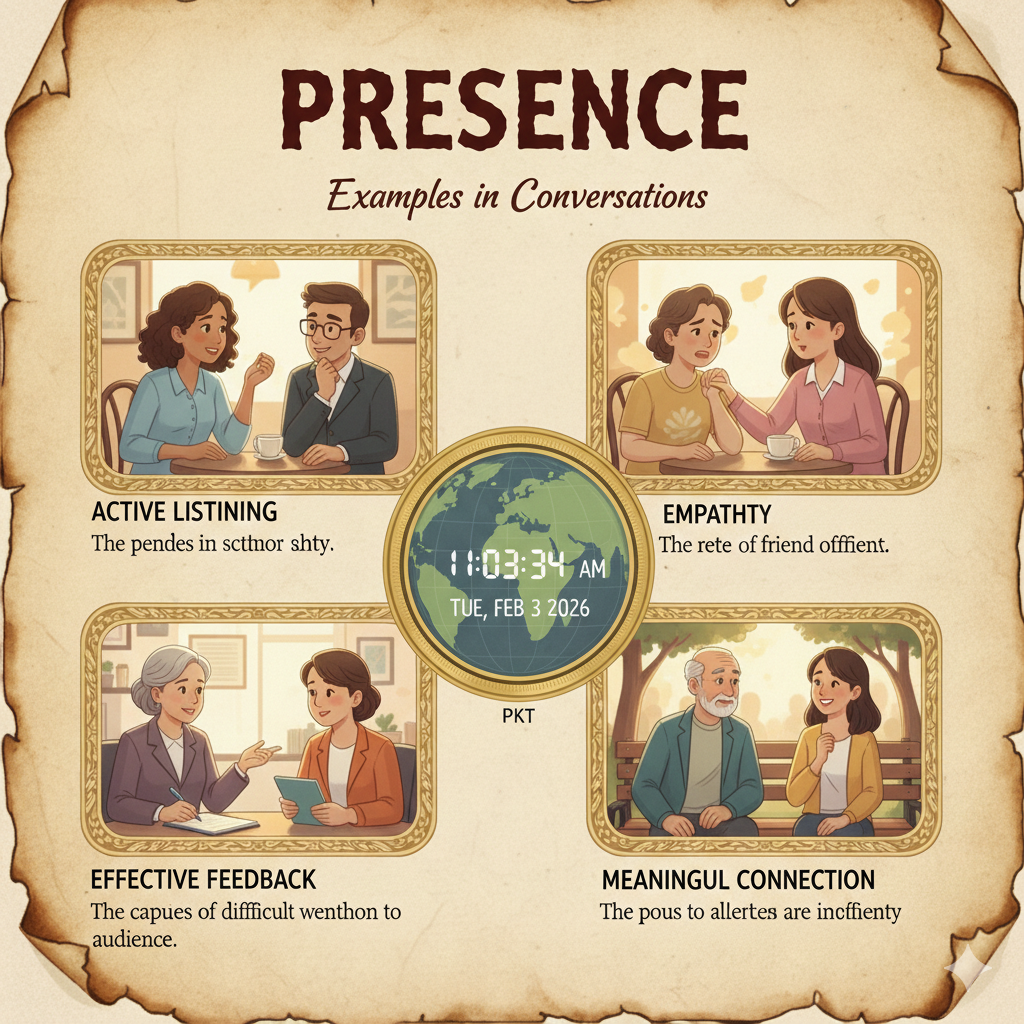
Examples of “Presence” in Conversations
Example 1 — Texting / Online Chat
A: Are you online?
B: Yeah, my presence shows active, what’s up?
Example 2 — Mindfulness
“True peace comes from being fully present in the moment.”
Example 3 — Business Context
“During the meeting, her presence alone commanded attention.”
Example 4 — Everyday Speech
“Even in silence, his presence was comforting.”
Similar or Related Terms
| Term | Meaning | Usage Example |
| Awareness | Conscious perception or attention | “Mindfulness increases awareness.” |
| Mindfulness | Being fully engaged in the moment | “Practice mindfulness to build presence.” |
| Charisma | Magnetic charm or appeal | “His charisma gives him presence.” |
| Vibe | Informal term for energy or atmosphere | “The room had a positive vibe.” |
These terms often overlap with “presence,” especially in personal growth and communication topics.
How to Use “Presence” Correctly
✅ Do:
- Use it to describe being attentive or noticeable:
- “She spoke with confidence and presence.”
- “She spoke with confidence and presence.”
- Use it in mindfulness or leadership contexts.
- Apply it in both formal and informal settings.
❌ Don’t:
- Confuse it with “presentation” (they’re related but not the same).
- Use it casually without context (“He has presence” might sound vague unless explained).
Tip: Think of presence as the energy or awareness you bring to any moment.
Common Mistakes or Misinterpretations
- Confusing “presence” with “attendance.”
- Attendance means physically being somewhere; presence means mentally and emotionally being there too.
- Attendance means physically being somewhere; presence means mentally and emotionally being there too.
- Thinking it’s only spiritual.
- While mindfulness uses it often, presence also applies to leadership, acting, and communication.
- While mindfulness uses it often, presence also applies to leadership, acting, and communication.
- Using it vaguely.
- Instead of saying “have presence,” specify: “have a calming presence,” “strong stage presence,” etc.
- Instead of saying “have presence,” specify: “have a calming presence,” “strong stage presence,” etc.
FAQ Section
1. What does “presence” mean in simple words?
It means being fully there — physically and mentally — in a moment or place. It’s awareness, attention, and engagement combined.
2. What does “presence” mean spiritually?
Spiritually, it’s the practice of living in the now, without distraction — often linked to meditation, mindfulness, and inner peace.
3. What does “executive presence” mean in business?
It refers to leadership qualities like confidence, poise, communication, and the ability to inspire trust and respect.
4. What is an example of presence in real life?
A teacher who keeps a class attentive or a leader who motivates a team—both show strong presence through their focus and energy.
5. How can I develop more presence?
Practice mindfulness, active listening, and self-awareness. Reduce distractions and give your full attention to the task or person in front of you.
6. What’s the difference between presence and charisma?
Presence is about being fully engaged; charisma adds charm and appeal. Presence can be quiet, while charisma is more expressive.
Conclusion
The word “presence” goes beyond just being somewhere—it’s about how you show up. Whether in a meeting, conversation, or meditation, true presence means being attentive, grounded, and authentic.
Now that you know the full meaning of presence, you can recognize and develop it in your daily life—online, at work, or in your relationships.
✨ Keep exploring our site for more clear explanations of trending terms, phrases, and concepts like this one!

Willie Nelson is a skilled and passionate content writer working as an expert author at maeningg.com. With strong knowledge of digital trends, slang meanings, and engaging online content, Willie focuses on creating clear, helpful, and reader-friendly articles.