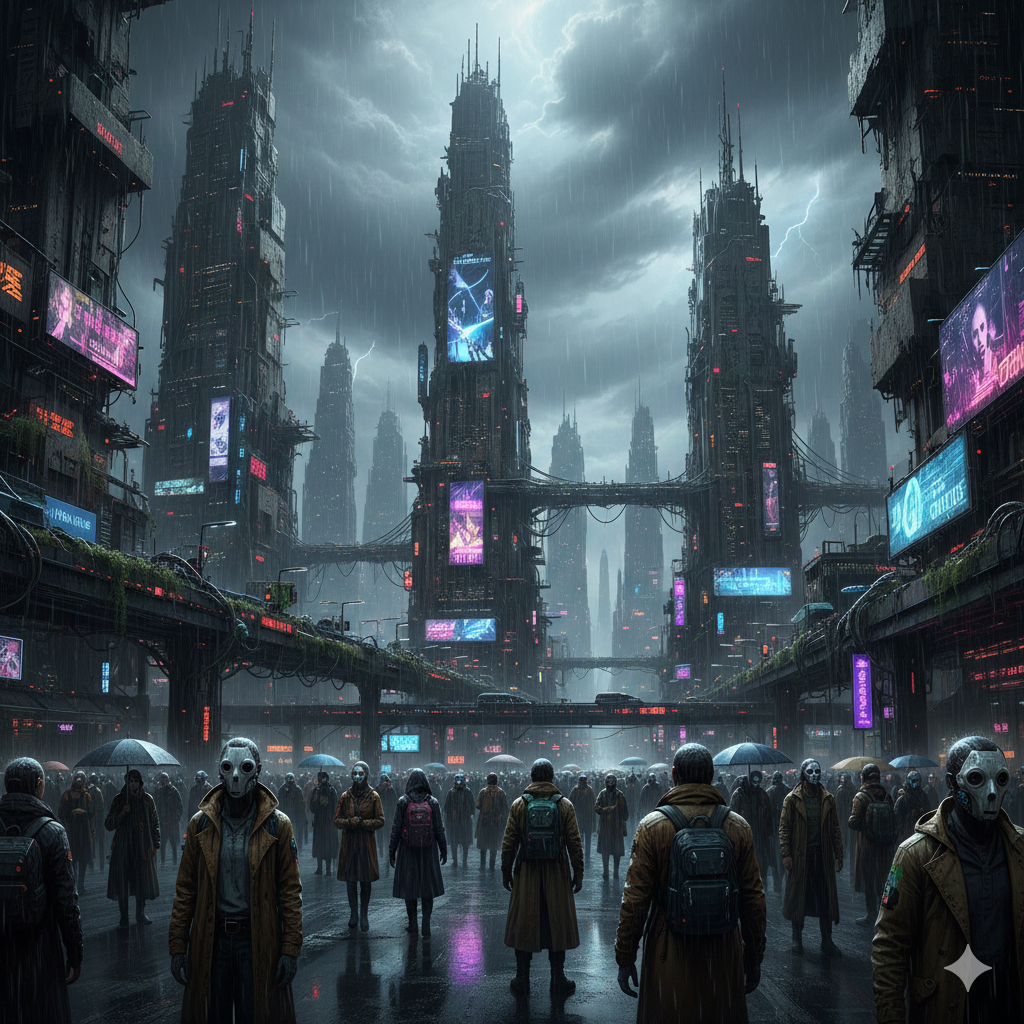
Ever watched The Hunger Games or Black Mirror and thought, “Wow, this world feels terrifyingly real”? That’s the power of a dystopian world — it mirrors society’s fears and flaws in exaggerated form.
The word “dystopian” often appears in movies, books, and even political discussions. But what does it actually mean?
In this guide, we’ll break down:
- The definition of “dystopian”
- Its origin and historical roots
- How it’s used in pop culture and everyday language
- Examples of dystopian scenarios
- Related terms and FAQs
Let’s dive into the dark — but fascinating — world of dystopian meaning.
🏙️ What Does “Dystopian” Mean?
“Dystopian” refers to an imagined or fictional society that is deeply flawed, oppressive, or nightmarish — the opposite of a perfect or “utopian” world.
It’s often used to describe stories, governments, or societies marked by control, inequality, fear, or loss of freedom.
In short:
Dystopian means a vision of the future where society has gone wrong — a warning of what could happen if things fall apart.
📜 Origin and Popularity
The term “dystopian” comes from the Greek words dys (bad) and topos (place), meaning “bad place.” It’s the opposite of utopia, a term coined by Sir Thomas More in 1516 to describe a perfect society.
“Dystopia” first appeared in the 19th century, but it gained popularity during the 20th century, especially after major wars and political revolutions.
Quick Timeline:
- 1516: “Utopia” coined by Thomas More.
- 1868: “Dystopia” first recorded in English political speeches.
- 1900s–Present: Used widely in literature, movies, and pop culture — from 1984 to The Handmaid’s Tale.
Today, the term is trending again, reflecting people’s concerns about AI, climate change, and surveillance.
🌐 Dystopian Meaning in Different Contexts
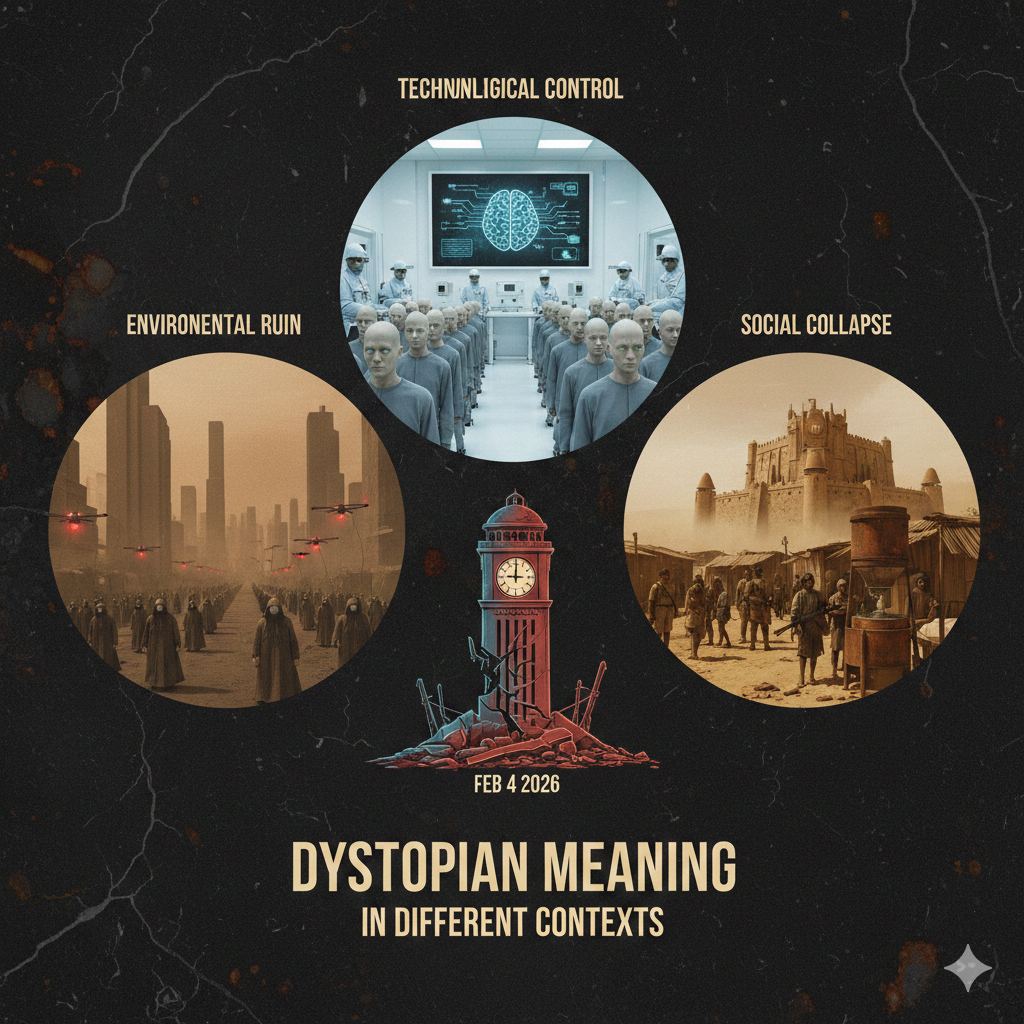
“Dystopian” isn’t limited to fiction anymore — it’s used across different platforms and discussions.
| Context | Meaning & Usage | Examples |
| In Literature & Film | Describes dark, oppressive worlds in fiction | The Hunger Games, 1984, Divergent |
| In Politics or News | Used to criticize real-world policies that feel controlling or unjust | “A dystopian future of mass surveillance” |
| On Social Media | Used humorously or critically to describe weird real-life situations | “This self-checkout line feels dystopian” |
So, whether it’s fiction or real life, calling something “dystopian” means it feels unnatural, dehumanizing, or frighteningly controlled.
💬 Examples of “Dystopian” in Conversations
Here are a few examples of how people use “dystopian” naturally:
In casual conversation:
“This city looks so empty at night — it’s kinda dystopian.”
In pop culture discussions:
“Black Mirror episodes always give off dystopian vibes.”
In writing or analysis:
“The novel explores a dystopian future where emotions are forbidden.”
In social commentary:
“Constant data tracking by companies feels like a dystopian reality.”
🔍 Similar or Related Terms
| Term | Meaning | Relation to Dystopian |
| Utopian | Ideal or perfect society | The opposite of dystopian |
| Post-apocalyptic | After a world-ending event | Often overlaps with dystopian themes |
| Apocalyptic | During catastrophic destruction | Can lead to dystopian outcomes |
| Dystopia | The actual bad society itself | “Dystopian” describes it as an adjective |
These terms often appear together in literature and movies, forming entire genres of storytelling focused on humanity’s darkest futures.
✍️ How to Use “Dystopian” Correctly
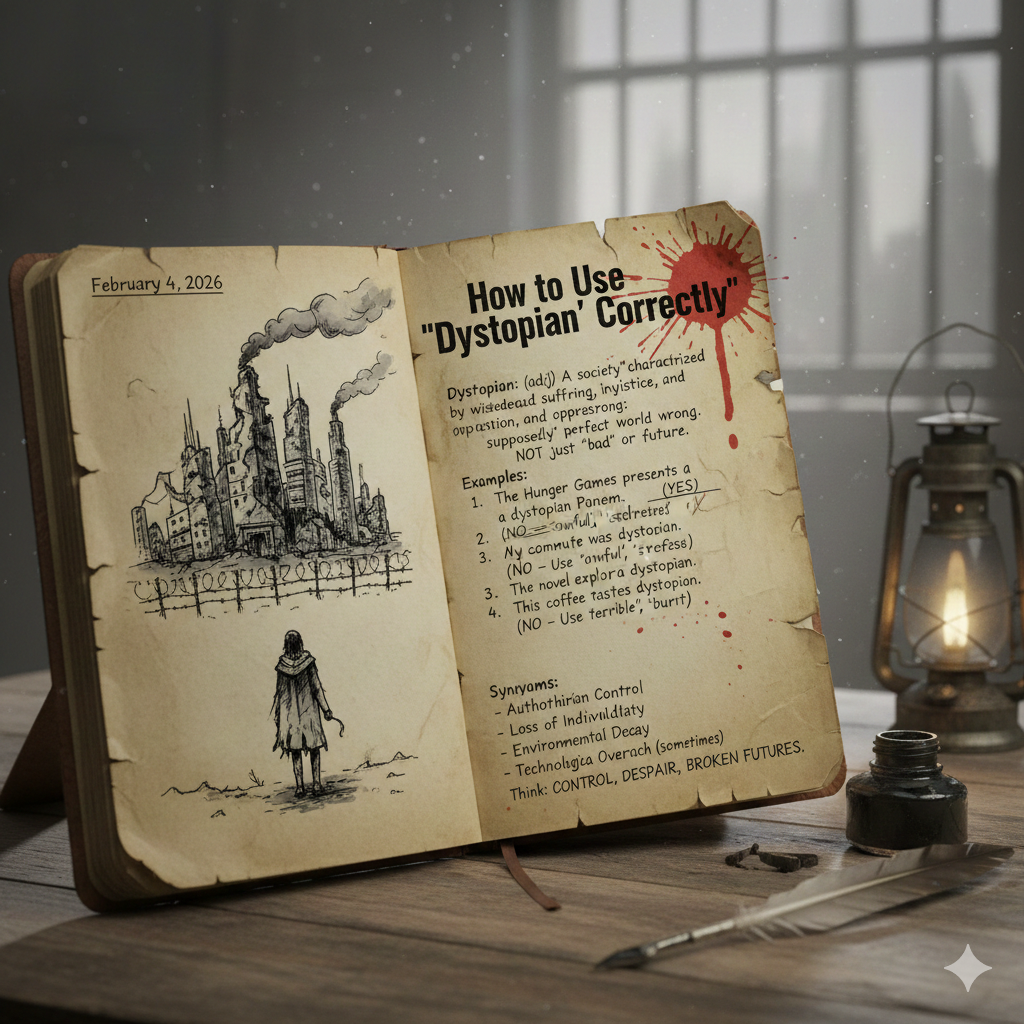
✅ Do use “dystopian” to describe bleak or oppressive fictional worlds.
✅ Do use it metaphorically to express real-life systems or events that feel controlling.
❌ Don’t use it to describe minor inconveniences like “bad Wi-Fi.”
❌ Don’t confuse it with “utopian” — they mean the opposite.
Example sentences:
- “The movie portrays a dystopian world ruled by corporations.”
- “Some people describe constant online monitoring as dystopian.”
⚠️ Common Mistakes or Misinterpretations
- Mixing up dystopian and utopian — remember, dystopian = bad place, utopian = perfect place.
- Using it for everyday problems — “Dystopian” implies societal collapse or loss of freedom, not just “weird.”
- Assuming it only applies to fiction — people now use it metaphorically for real events too.
❓ FAQ: Dystopian Meaning Explained
1. What does “dystopian” mean in simple words?
“Dystopian” means a terrible or frightening society, often ruled by fear, control, or injustice — the opposite of a perfect world.
2. Is “dystopian” slang or a literary term?
It’s primarily a literary and descriptive term, not slang. It’s used in writing, media, and discussions about society or politics.
3. What’s the difference between “dystopian” and “utopian”?
“Utopian” refers to an ideal world; “dystopian” is a nightmare version — full of oppression, poverty, or control.
4. Can real life be dystopian?
Yes. People sometimes describe modern issues like mass surveillance or environmental collapse as “dystopian” to emphasize how alarming they feel.
5. What are some famous dystopian stories?
Classic examples include 1984 by George Orwell, Brave New World by Aldous Huxley, and The Hunger Games by Suzanne Collins.
6. How do you use “dystopian” in a sentence?
“The movie shows a dystopian world where personal freedom no longer exists.”
🏁 Conclusion
To sum up, “dystopian” means a dark, flawed, and oppressive version of society, often used to warn us about where humanity could go wrong.
It originated from the opposite of “utopia” and now appears in books, movies, and real-life discussions.
So next time someone mentions a “dystopian world,” you’ll know they’re talking about a world gone wrong — and maybe, a warning for ours.
Now that you know what “dystopian” means, you’ll never be confused again! Keep exploring our site for more fascinating word meanings and modern slang.

Dolly Parton is a professional content writer at maeningg.com, specializing in clear, engaging, and well-researched digital content. With strong expertise in writing about text slang, meanings, lifestyle, and informative articles, Dolly focuses on helping readers understand internet language in a simple and relatable way.