Ever laughed when your overly confident friend tripped or when a celebrity’s scandal broke online? You might have felt schadenfreude—a complex human emotion that’s as fascinating as it is controversial.
In this article, we’ll unpack what “schadenfreude” means, where it came from, how it’s used in everyday conversations, and why psychologists consider it an essential part of human behavior. You’ll also see real-life examples, learn when it’s appropriate to use the word, and discover related emotional terms to better express yourself.
Let’s dive into the meaning, origin, and proper use of schadenfreude so you can understand this uniquely satisfying (and slightly guilty) feeling.

What Does Schadenfreude Mean?
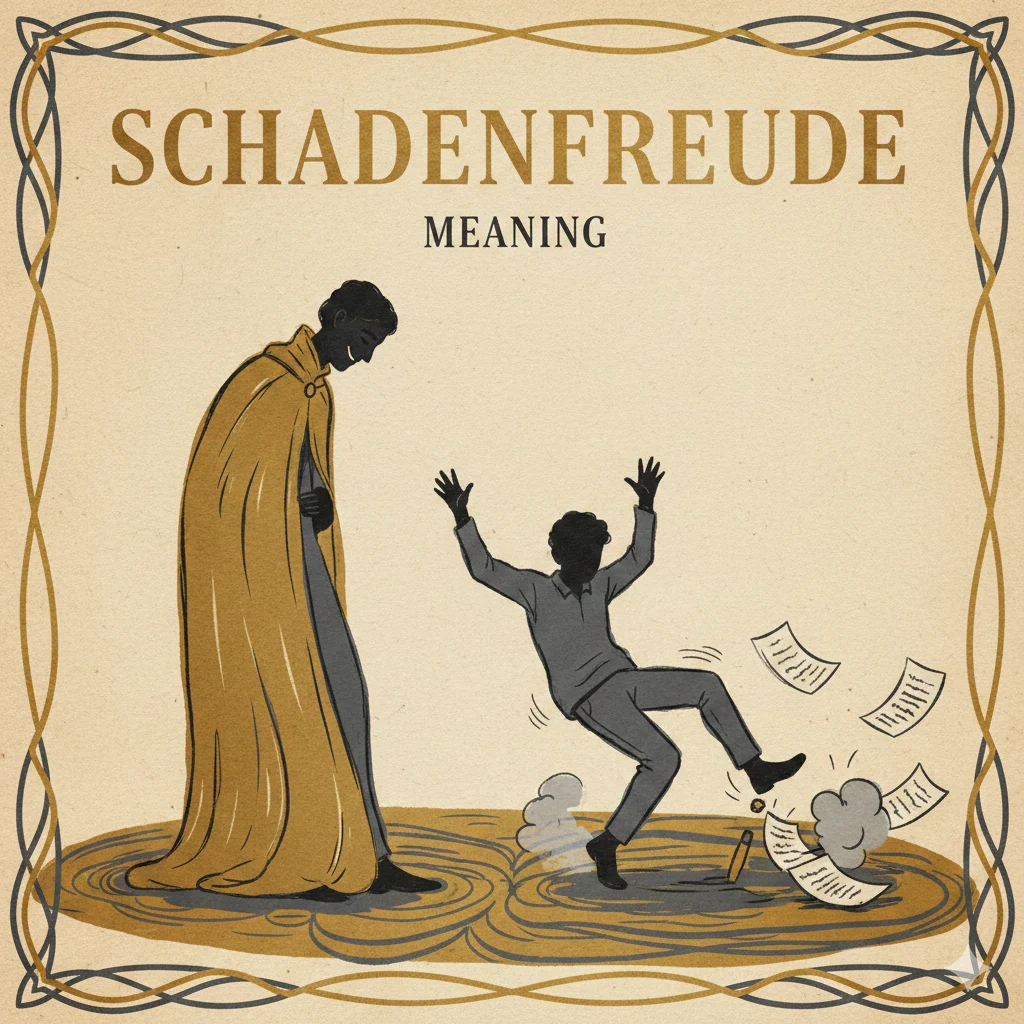
Schadenfreude (pronounced SHAH-den-froy-duh) means pleasure or satisfaction derived from someone else’s misfortune.
It’s not slang or an abbreviation—it’s a German word widely used in English to describe that ironic mix of joy and guilt when others fail or make mistakes. You’ll see it in psychology discussions, social media posts, and even in pop culture commentary.
Origin and Popularity
The word Schadenfreude comes from two German words:
- Schaden = harm or damage
- Freude = joy or pleasure
Together, they literally mean “damage-joy.”
The term first appeared in the 18th century and entered the English language in the 1850s, used by writers exploring human emotions. It gained global attention thanks to Freud’s psychological studies, news headlines, and popular culture moments—like reality TV, sports rivalries, and internet memes—where people openly express delight at others’ downfalls.
📈 Popularity Boost
In the digital era, schadenfreude exploded on platforms like Twitter, Reddit, and TikTok, where viral fails and celebrity mishaps get millions of views. The word became shorthand for a guilty pleasure we all recognize but rarely admit.
Schadenfreude Meaning in Different Contexts
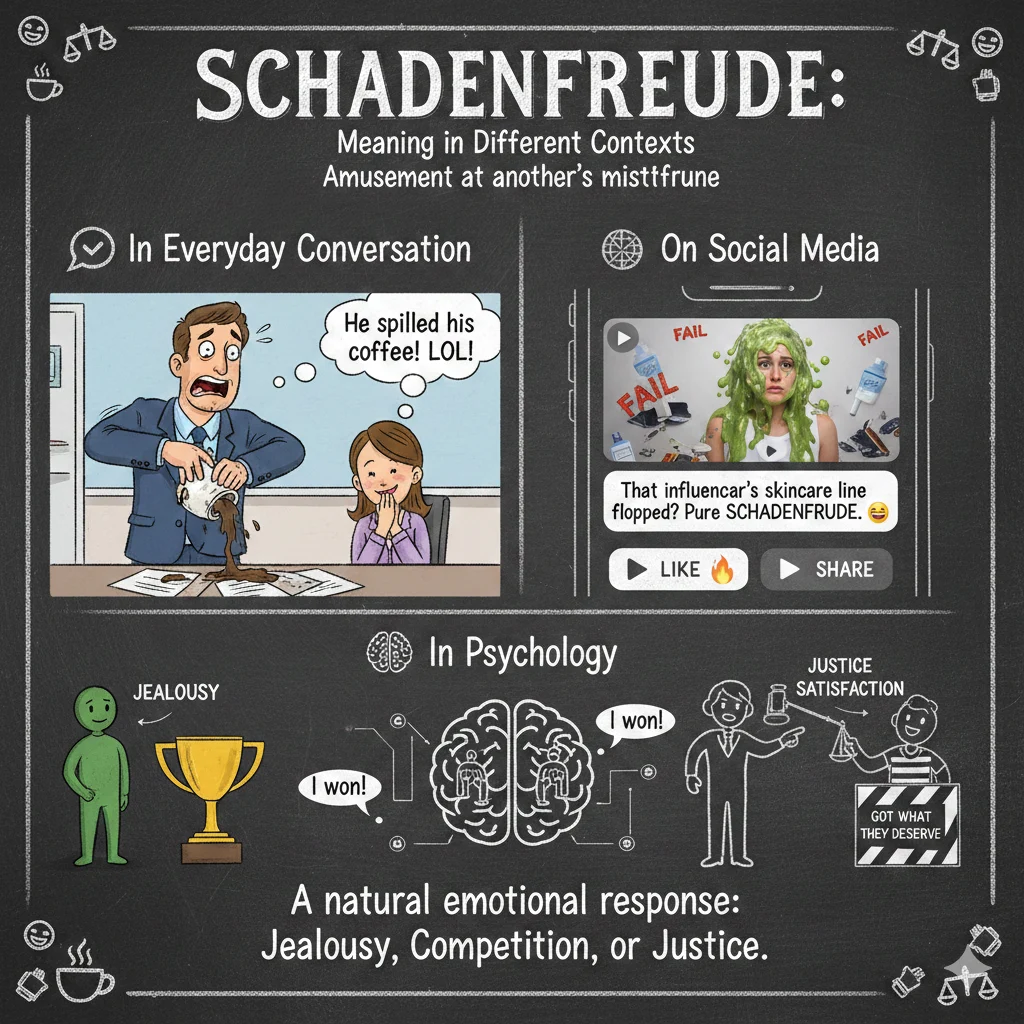
💬 In Everyday Conversation
Used to describe amusement at minor failures or ironic events.
Example: “I felt a bit of schadenfreude watching my rival spill coffee before his big meeting.”
🌐 On Social Media
Common in memes, reaction videos, or comments when someone experiences a humorous downfall.
Example: “That influencer’s skincare line flopped? Pure schadenfreude.”
🧠 In Psychology
Refers to a natural emotional response that can stem from jealousy, competition, or justice satisfaction—when someone “gets what they deserve.”
| Context | Meaning / Tone | Example |
| Texting | Light teasing | “You failed your diet already? Lol, schadenfreude moment!” |
| Academic | Emotional analysis | “Researchers study schadenfreude to understand social empathy.” |
| Pop Culture | Irony or karma | “When the villain loses—total schadenfreude!” |
Examples of Schadenfreude in Conversations
Here are a few realistic examples of how schadenfreude might appear in real-life talks or online:
Example 1 (Texting)
Friend 1: Did you see his ex’s new song flop?
Friend 2: I shouldn’t laugh… but yeah, schadenfreude hit hard 😅
Example 2 (Social Media)
Tweet: “Watching billionaires lose Twitter followers is my morning schadenfreude.”
Example 3 (Formal / Academic)
“Schadenfreude reflects the darker side of empathy, revealing how social comparison affects emotional satisfaction.”
Similar or Related Terms
Here are some related emotional concepts that connect with schadenfreude:
| Term | Meaning | Use Example |
| Envy | Wanting what someone else has | “Her success filled me with envy.” |
| Gloating | Openly celebrating another’s failure | “He couldn’t resist gloating after the win.” |
| Empathy Gap | Inability to feel for others | “A lack of empathy often fuels schadenfreude.” |
| Karma | The belief in moral retribution | “When the bully got fired, it felt like karma.” |
These terms help clarify the emotional shades around schadenfreude, from envy to justified satisfaction.
How to Use Schadenfreude Correctly
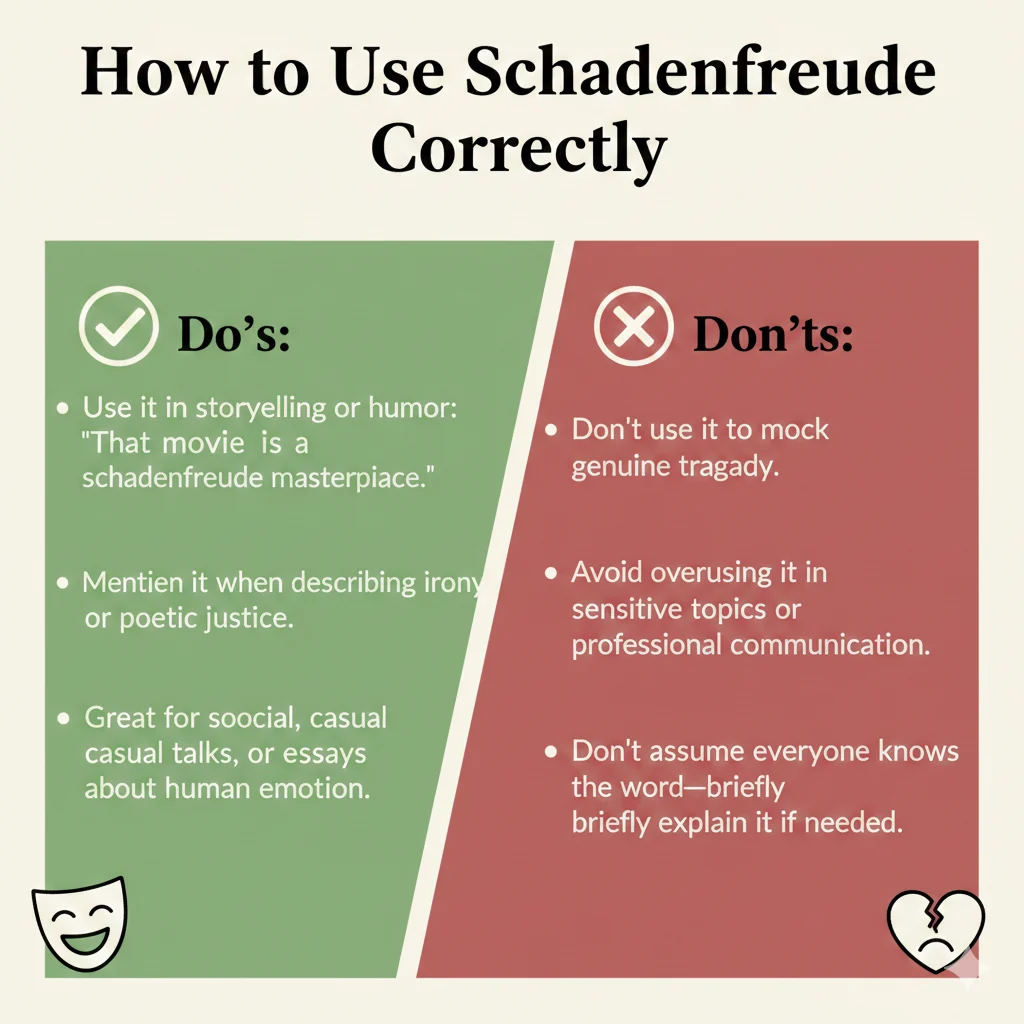
✅ Do’s:
- Use it in storytelling or humor: “That movie is a schadenfreude masterpiece.”
- Mention it when describing irony or poetic justice.
- Great for social media, casual talks, or essays about human emotion.
❌ Don’ts:
- Don’t use it to mock genuine tragedy.
- Avoid overusing it in sensitive topics or professional communication.
- Don’t assume everyone knows the word—briefly explain it if needed.
Common Mistakes or Misinterpretations
- Confusing it with envy: Envy is wanting what others have; schadenfreude is enjoying when they lose it.
- Using it as slang: It’s a formal term, not casual text lingo.
- Thinking it’s always negative: It can also express justice satisfaction—when bad behavior gets fair consequences.
FAQ Section
1. What does schadenfreude mean in simple words?
It means feeling happy or amused when something bad happens to someone else, especially if they deserved it or acted arrogantly before.
2. Is schadenfreude a bad emotion?
Not necessarily. It’s a normal human emotion that shows social comparison. It becomes unhealthy only if it turns into cruelty or jealousy.
3. Where did schadenfreude originate?
It’s a German word from the 18th century that literally translates to “harm-joy.” It entered English to describe a universal emotion without a single-word equivalent.
4. Can you use schadenfreude in daily conversation?
Yes! It’s common in news, pop culture, and casual talk, especially when describing ironic or deserved outcomes.
5. What’s an example of schadenfreude?
Laughing when a rude driver gets a speeding ticket or when your rival’s plan backfires perfectly.
6. What’s the opposite of schadenfreude?
The opposite emotion is “freudenfreude,” which means feeling joy for someone else’s happiness or success.
Conclusion
Now that you understand schadenfreude’s meaning, origin, and usage, you’ll recognize it everywhere—from viral memes to movie moments. This word beautifully captures the bittersweet side of human emotion: the joy in irony, the satisfaction in justice, and the humor in failure.
Next time someone slips up or karma strikes, you’ll know the perfect word to describe that feeling—schadenfreude.
Keep exploring our site for more fascinating word origins and internet terms that shape how we communicate today.

Willie Nelson is a skilled and passionate content writer working as an expert author at maeningg.com. With strong knowledge of digital trends, slang meanings, and engaging online content, Willie focuses on creating clear, helpful, and reader-friendly articles.