Ever heard someone say, “He’s being ornery today” and wondered what that really means? You’re not alone. The word “ornery” is one of those quirky terms that sounds funny but carries a strong attitude.
In this guide, you’ll learn exactly what “ornery” means, where it came from, and how it’s used in everyday speech. We’ll explore its definition, origin, real-world examples, related terms, and FAQs to help you sound more confident and natural when you use it.
By the end, you’ll never be confused by the phrase “don’t be so ornery!” again.
💬 What Does “Ornery” Mean?
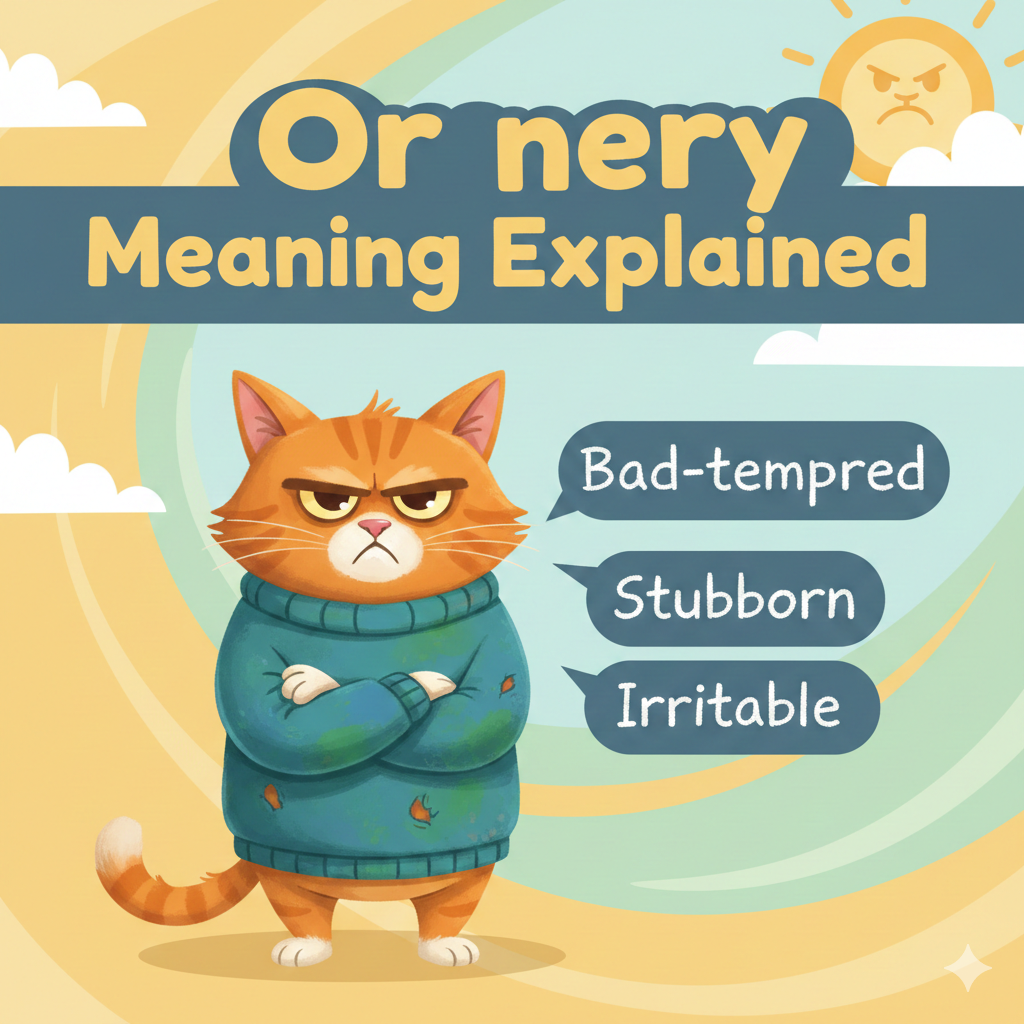
“Ornery” means irritable, stubborn, or bad-tempered — someone who’s difficult to please or easily annoyed.
It’s a descriptive adjective, most often used in everyday English to describe people, kids, or even pets acting cranky or mischievous.
📱 Commonly used in: casual conversation, social media captions, and storytelling.
🕰️ Origin and Popularity
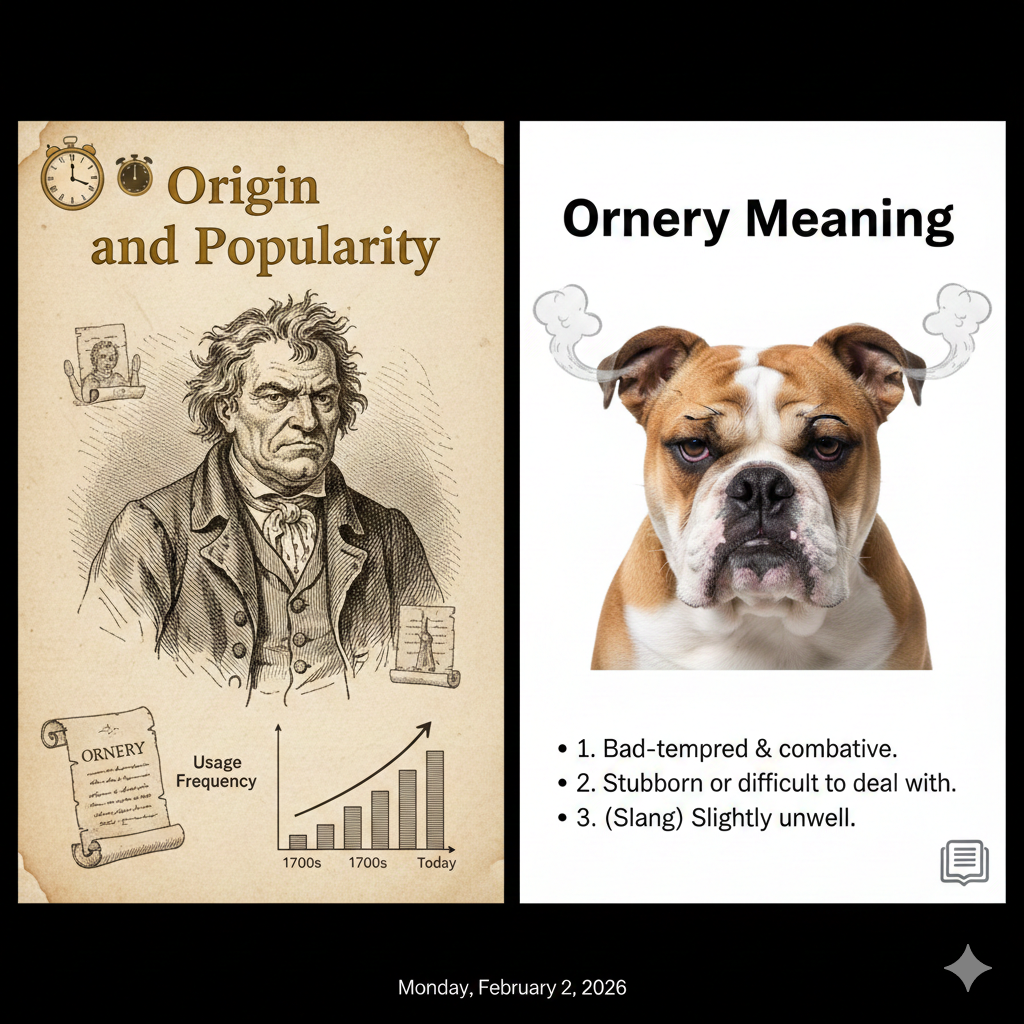
The word “ornery” dates back to 19th-century American English, evolving from the word “ordinary.” Over time, its meaning shifted from “common” to describing someone who’s contrary or mean-spirited.
By the late 1800s, “ornery” became a favorite term in rural and Southern U.S. dialects, often used affectionately to tease someone for being grumpy or stubborn — like calling a mischievous grandpa or a feisty dog ornery.
Its usage continues today, especially in informal speech and humorous online posts.
🌐 “Ornery” Meaning in Different Contexts
Here’s how “ornery” can vary slightly depending on where or how it’s used:
| Context | Meaning / Tone | Example Usage |
| In Daily Conversation | Irritable or bad-tempered | “Don’t talk to him before coffee — he’s ornery in the morning.” |
| On Social Media | Playfully stubborn or sassy | “My cat woke me up at 4 a.m. again. #ornery” |
| In Literature or Movies | Rough, tough, or rebellious | “He was an ornery cowboy who never followed the rules.” |
| In Family Talk | Lovingly cranky | “Grandma gets a little ornery when she loses at cards.” |
👉 The tone often depends on context — it can sound critical or endearing.
💬 Examples of “Ornery” in Conversations
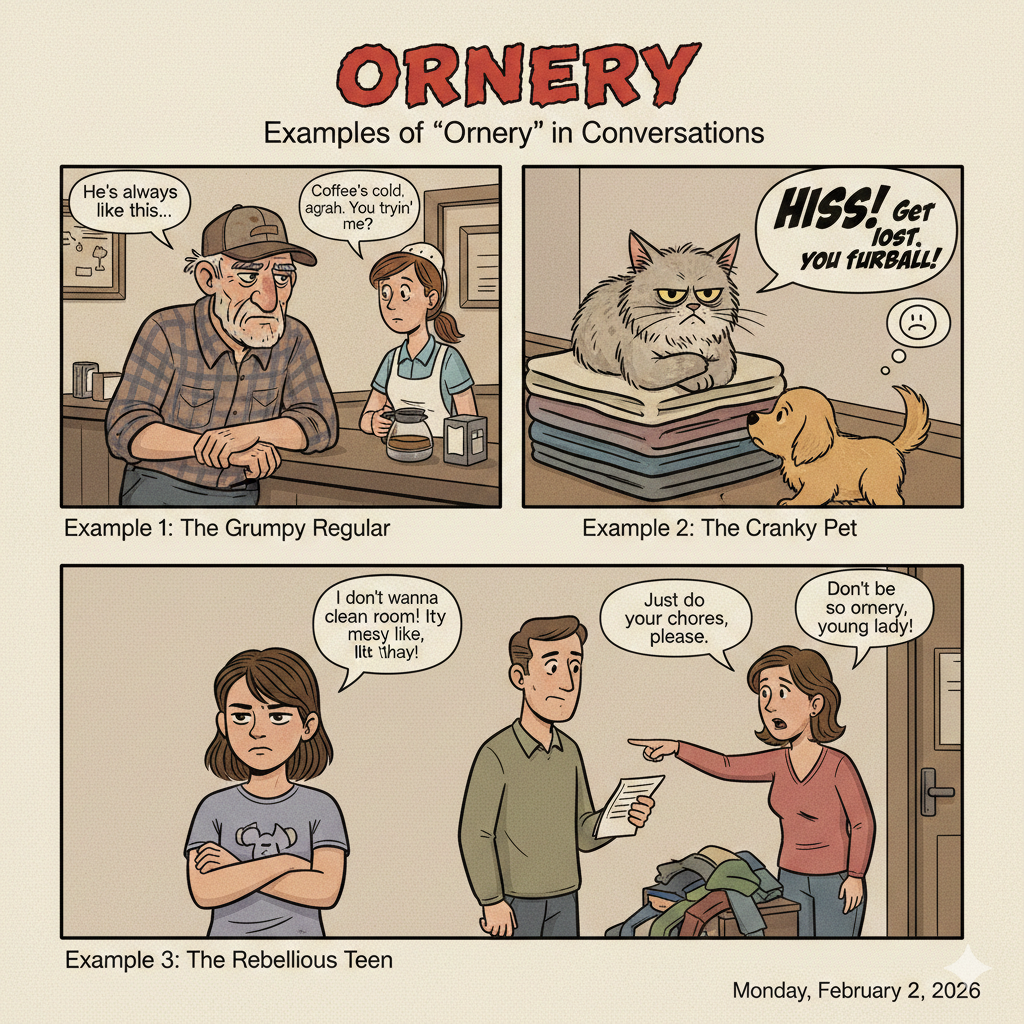
Example 1 (Casual):
Ava: Why’s Ben so quiet today?
Liam: He’s just being ornery — didn’t get enough sleep.
Example 2 (Playful):
Friend 1: My dog refused to come inside again.
Friend 2: Ha! Sounds like an ornery pup.
Example 3 (Family):
Mom: Grandpa’s complaining about the Wi-Fi again.
Dad: You know how ornery he gets with technology.
Example 4 (Formal Writing):
“The senator’s ornery resistance to compromise delayed the bill’s passage.”
🔍 Similar or Related Terms
Here are some words often used similarly to “ornery” — but with slight differences:
| Term | Meaning | Tone |
| Grumpy | Bad-tempered or irritable | Neutral |
| Cantankerous | Stubborn and difficult to deal with | Formal / Negative |
| Cranky | Irritated or fussy | Informal |
| Feisty | Spirited, bold, and energetic | Positive |
| Moody | Temperamental or emotionally changeable | Neutral |
Using “ornery” often adds a Southern or playful touch that makes it sound warmer than words like “mean” or “rude.”
🧠 How to Use “Ornery” Correctly
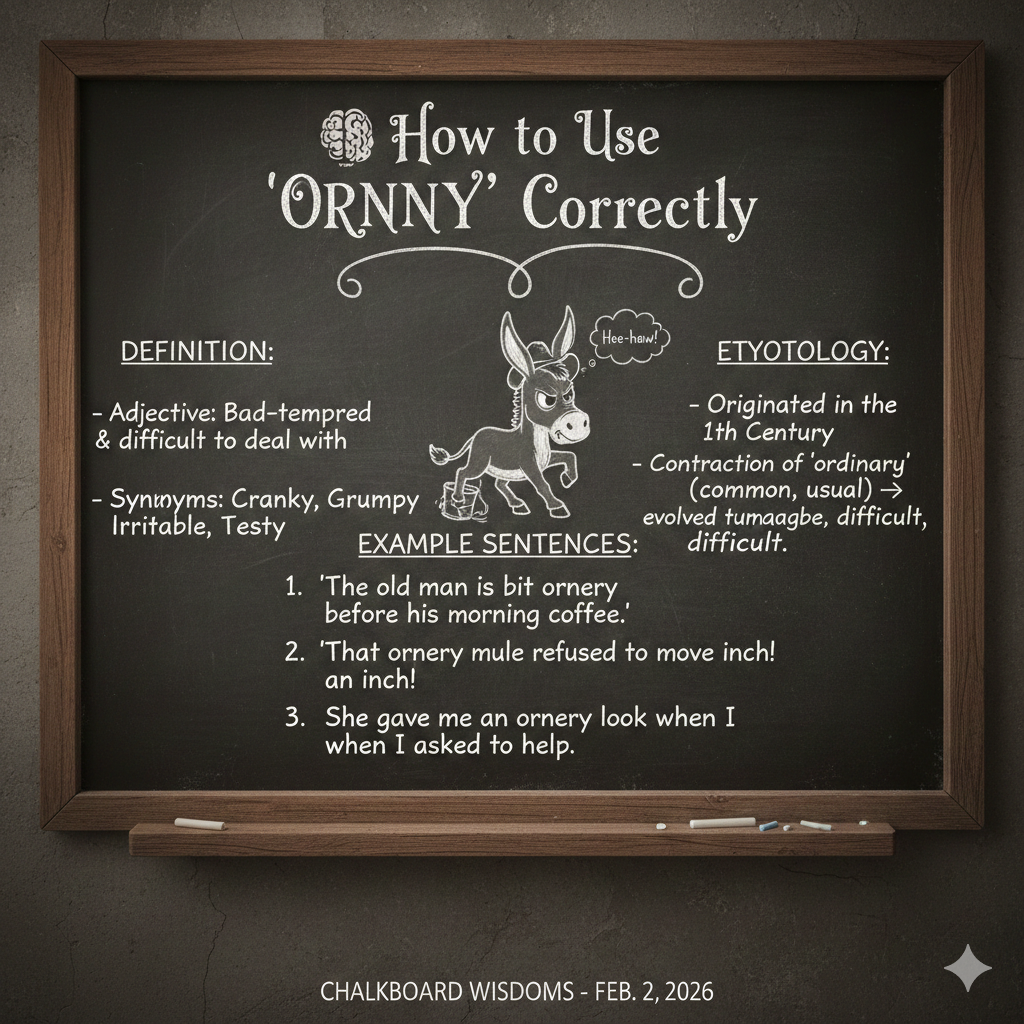
✅ Do’s
- Use “ornery” in casual conversations or storytelling.
- Use it humorously to describe someone’s mood or behavior.
- Pair it with people or pets to sound natural: “My cat’s ornery today.”
❌ Don’ts
- Don’t use it in formal writing like resumes or reports.
- Avoid calling someone “ornery” in serious arguments — it can sound rude.
- Don’t confuse it with “ordinary.”
⚠️ Common Mistakes or Misinterpretations
- Confusing “ornery” with “ordinary” — They sound similar but mean totally different things.
- Assuming it’s always negative — It can actually be affectionate, depending on tone.
- Overusing it in text or business chats — It’s slangy and best for informal talk.
Tip: If you’d call someone “cranky” or “stubborn” but with love — “ornery” fits perfectly.
❓ FAQ Section
1. What does “ornery” mean in texting?
It means someone is acting grumpy or difficult. For example, “You’re being ornery today” usually means they’re being moody or teasingly stubborn.
2. Is “ornery” slang or a real word?
It’s a real English word — not just slang — though it’s mostly used in informal conversation.
3. What’s the difference between “ornery” and “cranky”?
Both describe irritability, but “ornery” implies stubbornness or a bad mood with a bit of attitude, while “cranky” just means irritated or tired.
4. Can you call a child “ornery”?
Yes! It’s often used affectionately for mischievous kids — “That ornery little boy just hid my keys again.”
5. Where is “ornery” most commonly used?
It’s most popular in the Southern United States and Midwestern regions, but it’s recognized across all English-speaking areas.
6. When should you not use “ornery”?
Avoid it in formal settings, business emails, or serious discussions — it can sound unprofessional or dismissive.
🏁 Conclusion
Now you know that “ornery” isn’t just a funny-sounding word — it’s a colorful way to describe someone who’s being cranky, difficult, or playfully stubborn. From its 1800s roots in American slang to today’s social media captions, it’s a word packed with character.
So next time your pet refuses to listen or your friend is in a mood, you’ll know exactly what to say — “Don’t be so ornery!”
Keep exploring our site for more fun and insightful explanations of English slang and everyday expressions!

Dolly Parton is a professional content writer at maeningg.com, specializing in clear, engaging, and well-researched digital content. With strong expertise in writing about text slang, meanings, lifestyle, and informative articles, Dolly focuses on helping readers understand internet language in a simple and relatable way.