Have you ever come across the word “deity” while reading a mythological story or watching a fantasy movie and wondered what it truly means? You’re not alone. The term “deity” has deep historical roots yet continues to appear in modern conversations, art, and pop culture.
In this guide, you’ll learn:
- What “deity” means and how it’s used today
- Where the term originated and its historical background
- How it’s used in religion, literature, and everyday speech
- Examples, related words, and common questions
By the end, you’ll have a clear, modern understanding of the word and how to use it naturally in both writing and conversation.
What Does “Deity” Mean?
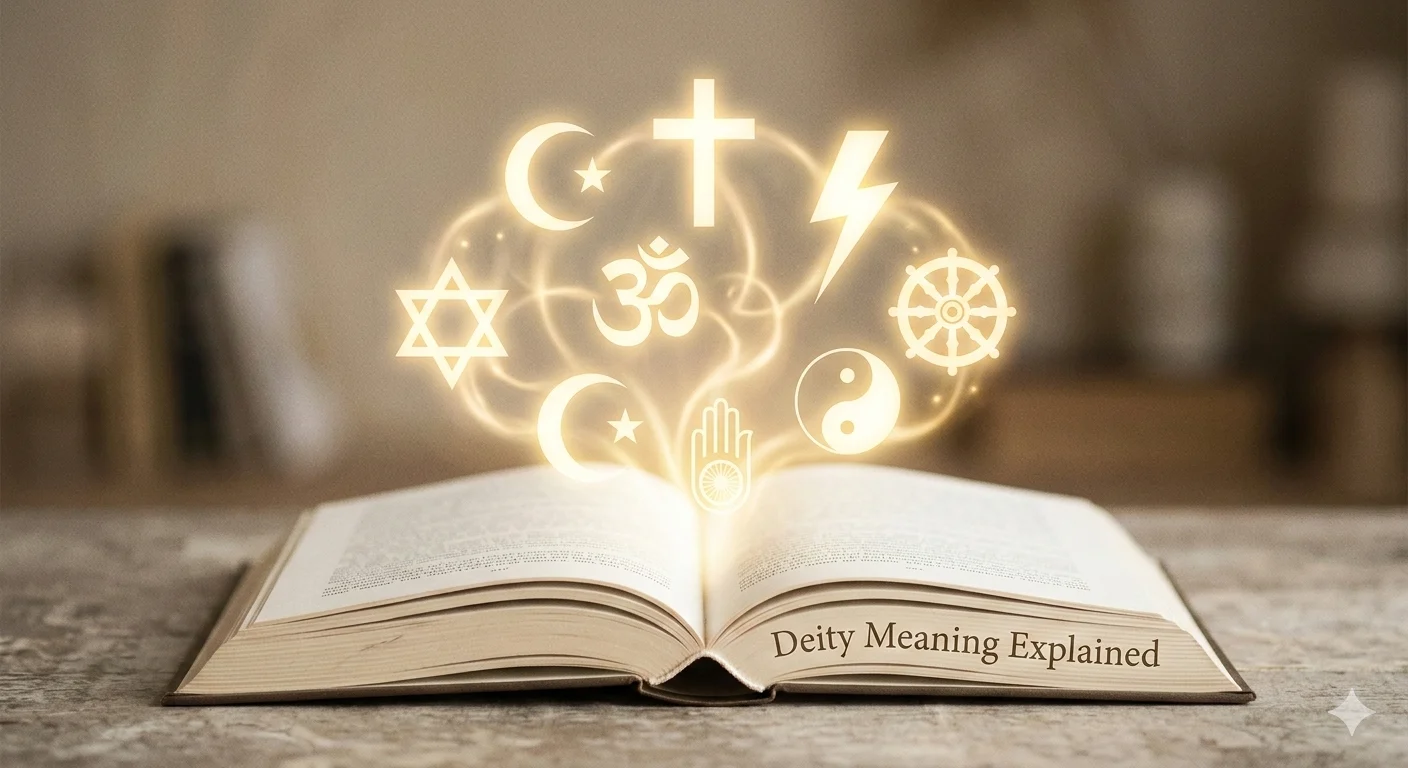
A deity is a god or divine being that is worshipped or revered in various religions and mythologies. The term refers to any supernatural being believed to have control over aspects of the universe, life, or nature.
In simpler terms, a deity is a higher power or divine figure — like Zeus in Greek mythology, Vishnu in Hinduism, or Allah in Islam.
Origin and Popularity
The word “deity” comes from the Latin word deus, meaning “god.” It entered English through Old French (deité) during the 14th century. Over centuries, it became a key term in theological, cultural, and philosophical discussions.
Historical Timeline
- 14th Century: First recorded use in English religious texts.
- 17th–18th Century: Widely adopted in Christian and academic writings.
- Modern Era: Used broadly to refer to gods or divine entities from all faiths — ancient or modern.
Today, “deity” isn’t just confined to religious texts. It’s commonly found in movies, literature, philosophy, and even fantasy games, symbolizing divine power or supreme authority.
“Deity” Meaning in Different Contexts
🕊️ In Religion
In religious contexts, a deity represents a divine being worshipped by followers. Examples include:
- Hinduism: Deities like Krishna, Shiva, and Lakshmi.
- Greek Mythology: Deities such as Apollo, Athena, and Poseidon.
- Christianity: Refers to the divine nature of God or the Holy Trinity.
📚 In Literature and Culture
Writers often use the term “deity” metaphorically to describe a character with god-like power, wisdom, or beauty.
Example: “The artist was treated as a creative deity by her fans.”
💬 In Modern Speech
While rare in everyday chat, “deity” may appear in philosophical discussions or media reviews, especially when comparing humans to gods in influence or fame.
Example: “In the tech world, Steve Jobs is often spoken of as a deity of innovation.”
| Context | Meaning | Example |
| Religion | God or divine being | “Zeus is a powerful deity in Greek mythology.” |
| Literature | Symbol of power or beauty | “The actress was portrayed as a deity of grace.” |
| Everyday Use | Person admired or idolized | “Fans treated the singer like a pop deity.” |
Examples of “Deity” in Conversations
Example 1 – Religious Discussion
Person A: Who is the main deity in Hinduism?
Person B: There are many, but Vishnu and Shiva are among the most worshipped.
Example 2 – Pop Culture Reference
Person A: People treat celebrities like deities nowadays.
Person B: True! The admiration can almost seem spiritual.
Example 3 – Academic Use
Professor: The concept of a supreme deity differs across cultures, reflecting unique worldviews.
Similar or Related Terms
| Term | Meaning | Relation to “Deity” |
| Divine | Having godlike qualities | Describes something sacred or heavenly |
| God/Goddess | A specific deity or divine being | More personal term for a deity |
| Supreme Being | The highest form of divinity | Often used in monotheistic faiths |
| Mythological Figure | A character from ancient stories | May or may not be a deity |
| Spirit | A supernatural essence | Can represent lesser divine forms |
How to Use “Deity” Correctly
✅ Do:
- Use it when referring to gods, goddesses, or divine beings.
- Use in formal writing, religious discussions, or academic essays.
❌ Don’t:
- Use it casually in slang or text messages.
- Confuse it with “idol” or “celebrity” unless speaking metaphorically.
Example: “Ancient Egyptians worshipped the sun deity Ra.”
Incorrect: “He’s the deity of our friend group.” (Unless used humorously)
Common Mistakes or Misinterpretations
- Confusing “deity” with “divinity”:
Divinity refers to divine nature or quality, while deity refers to an actual god or being. - Assuming all deities are benevolent:
In many mythologies, deities can be good or evil, symbolizing balance or chaos. - Overusing in casual speech:
It sounds too formal for everyday use — better suited for writing or storytelling.
FAQs About “Deity”
1. What does “deity” mean in simple words?
A deity is a god or divine being worshipped in religion or mythology.
2. Is “deity” the same as “god”?
Almost — “god” refers to a specific being, while “deity” is a broader term that can refer to any divine entity across religions.
3. Can a person be called a deity?
Only metaphorically. You might call someone a “deity” if they’re admired to an extreme level, like a superstar or icon.
4. What’s the plural of “deity”?
The plural is “deities.” Example: “The ancient Greeks believed in many deities.”
5. Where is the word “deity” most commonly used?
In religious texts, philosophy, mythology, and literature — or when describing divine concepts.
6. What’s the difference between deity and divinity?
A deity is the being itself; divinity is the quality or essence of being divine.
Conclusion
To sum it up, a deity is a god, goddess, or divine being that represents power, creation, or spiritual authority. From ancient temples to modern films, the idea of deities continues to shape how humans understand the universe and their place in it.
Now that you know what “deity” means and how to use it, you’ll recognize it everywhere — in books, movies, and even everyday discussions about faith and symbolism. Keep exploring our site for more fascinating word meanings and cultural insights!

Dolly Parton is a professional content writer at maeningg.com, specializing in clear, engaging, and well-researched digital content. With strong expertise in writing about text slang, meanings, lifestyle, and informative articles, Dolly focuses on helping readers understand internet language in a simple and relatable way.