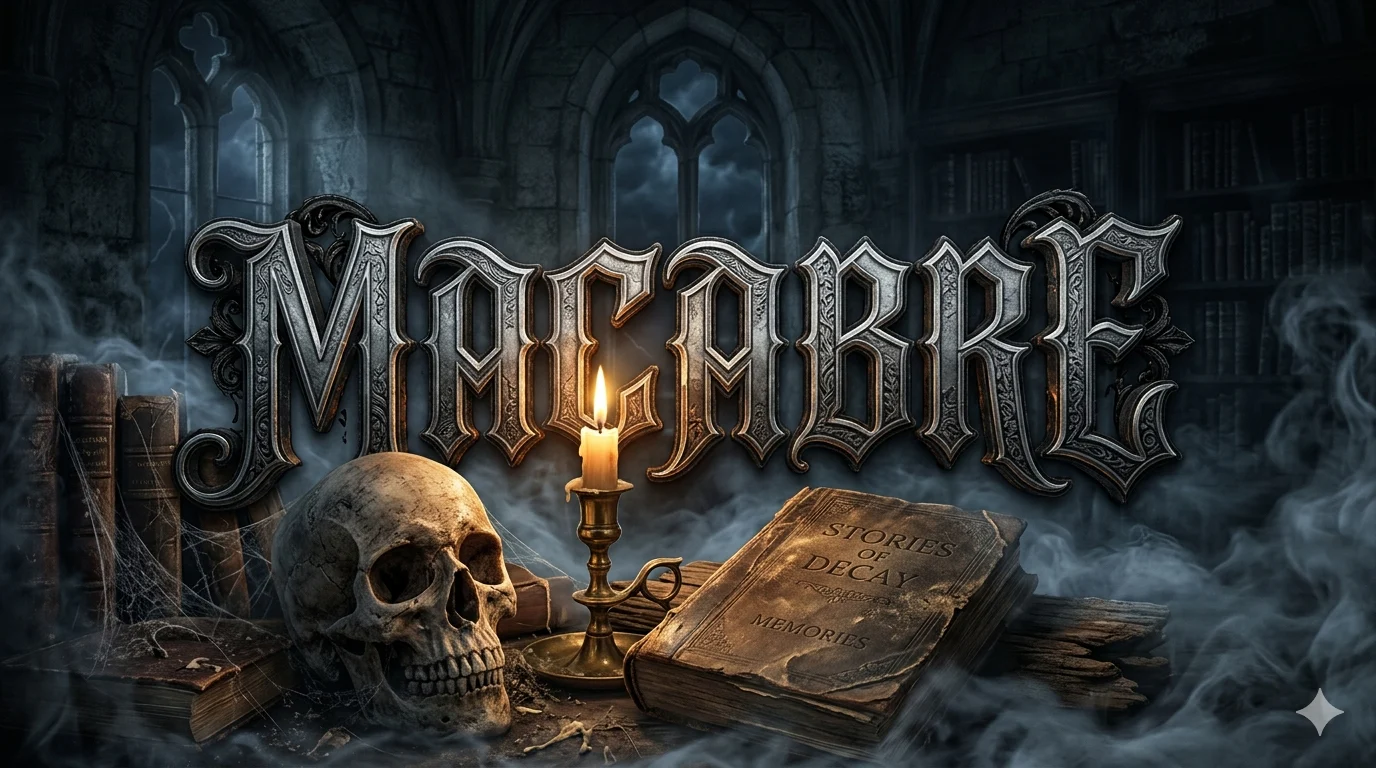
Ever come across the word macabre and instantly felt a creepy, unsettling vibe? You’re not alone—this word is often used in horror, movies, and storytelling, but many people aren’t sure what it truly means.
Macabre meaning refers to something grim, eerie, and related to death or the supernatural, often creating a disturbing or haunting feeling.
Why is this word so powerful? Macabre is used to describe scenes or ideas that focus on death or dark themes—like a chilling horror scene or a ghost story that sends shivers down your spine.
Understanding this word helps you describe intense, eerie situations more clearly and makes your vocabulary sound more expressive and refined.
💡 Tip: Use macabre when something feels dark, creepy, and haunting.
What Does Macabre Mean?
Macabre describes anything that is gruesome, horrifying, or connected with death, often evoking fear or fascination.
- Type: Adjective
- Usage: Commonly used in literature, art, movies, and casual conversations about eerie topics.
Example:
“The movie had a macabre twist that left the audience shivering with suspense.”
Origin and Popularity
The word macabre has roots in Middle French during the 14th century. It was initially associated with the “Dance of Death” (La Danse Macabre), a medieval allegory reminding people that death comes for everyone, regardless of status.
Over time, it became popular in:
- Gothic literature – Think Edgar Allan Poe and H.P. Lovecraft.
- Modern pop culture – Horror films, true crime podcasts, and Halloween aesthetics.
- Social media & memes – Especially in posts celebrating the eerie or surreal.
Timeline Snapshot:
- 14th century: Term originates in France.
- 15th–17th century: Used in European art depicting death.
- 19th century: Gothic literature popularizes it.
- 21st century: Internet culture revives its spooky charm.
Macabre Meaning in Different Contexts
| Context | Meaning & Use | Example |
| In Literature | Dark, death-related themes | “Poe’s stories are rich with macabre imagery.” |
| Movies & TV | Horror, thrillers, or grim humor | “The film’s macabre humor isn’t for the faint-hearted.” |
| Art | Gothic or death-inspired visuals | “The painting had a macabre elegance that captivated viewers.” |
| Casual Conversation | Refers to something creepy or chilling | “That Halloween display is super macabre.” |
Examples of Macabre in Conversations
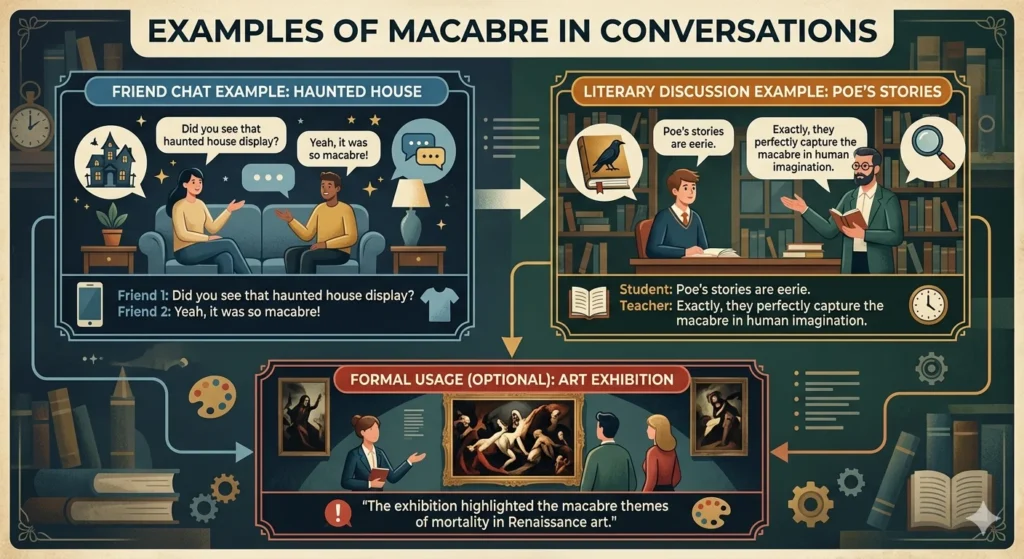
Friend Chat Example:
- Friend 1: Did you see that haunted house display?
- Friend 2: Yeah, it was so macabre!
Literary Discussion Example:
- Student: Poe’s stories are eerie.
- Teacher: Exactly, they perfectly capture the macabre in human imagination.
Formal Usage (Optional):
- “The exhibition highlighted the macabre themes of mortality in Renaissance art.”
Similar or Related Terms
Here are words and phrases that are often used similarly to macabre:
| Term | Meaning |
| Grisly | Shockingly gruesome or horrifying |
| Ghastly | Extremely unpleasant or frightful |
| Creepy | Causing an uneasy feeling of fear or discomfort |
| Morbid | Having an abnormal fascination with death or disease |
Tip: While these terms overlap, macabre often conveys an artistic or literary tone rather than casual fear.
How to Use Macabre Correctly
✅ Do:
- Use it when describing dark art, literature, or eerie atmospheres.
- Use in conversations or writing where a slightly formal, artistic tone is appropriate.
❌ Don’t:
- Use casually with children or in light-hearted contexts where “scary” suffices.
- Confuse with simple words like “creepy” or “gross” when you mean literary or artistic horror.
Common Mistakes or Misinterpretations
- Not just scary: Many confuse macabre with basic fear, but it specifically relates to death or grim themes.
- Not informal slang: While used online, it isn’t a casual internet slang term—it carries literary weight.
- Misused in comedy: Macabre humor works, but calling something mildly spooky “macabre” can seem exaggerated.
FAQs About Macabre
1. What does macabre mean in literature?
In literature, macabre describes stories, characters, or imagery connected to death, horror, and the grotesque, often creating a chilling or haunting atmosphere.
2. Is macabre a formal word?
Yes, macabre is considered formal or literary. It’s often used in writing, art critique, or educated conversation rather than casual slang.
3. How is macabre different from creepy?
Creepy is a general feeling of fear or unease, while macabre specifically involves death, horror, or grim themes, often with an artistic or literary nuance.
4. Can I use macabre in casual conversation?
Yes, but it works best among adults or in contexts discussing films, books, or art. Saying a playground is macabre would feel off.
5. Where is macabre most commonly used?
It’s widely used in literature, film critique, art commentary, and social media posts focused on horror or dark aesthetics.
6. Can macabre describe humor?
Yes! Macabre humor is dark, often morbid, and sometimes uncomfortable but intentionally funny.
Conclusion
Now that you know what macabre means, you can confidently identify its use in literature, art, movies, and everyday conversations. From its chilling origins in medieval France to its modern role in pop culture and social media, macabre captures the fascination humans have with the eerie, the grim, and the hauntingly beautiful.
Next time you see a dark painting, a creepy movie poster, or a spine-chilling story, you’ll know exactly why it’s called macabre. Keep exploring our site for more insights into words, slang, and cultural expressions that make language fascinating!

Dolly Parton is a professional content writer at maeningg.com, specializing in clear, engaging, and well-researched digital content. With strong expertise in writing about text slang, meanings, lifestyle, and informative articles, Dolly focuses on helping readers understand internet language in a simple and relatable way.