Hallelujah means “praise the Lord” or “praise God.” It is a powerful word used to express joy, gratitude, worship, and relief.
Have you ever heard someone shout “Hallelujah!” during a powerful moment and wondered what it truly means? It’s more than just a word—it’s a deep expression of faith, hope, and heartfelt praise.
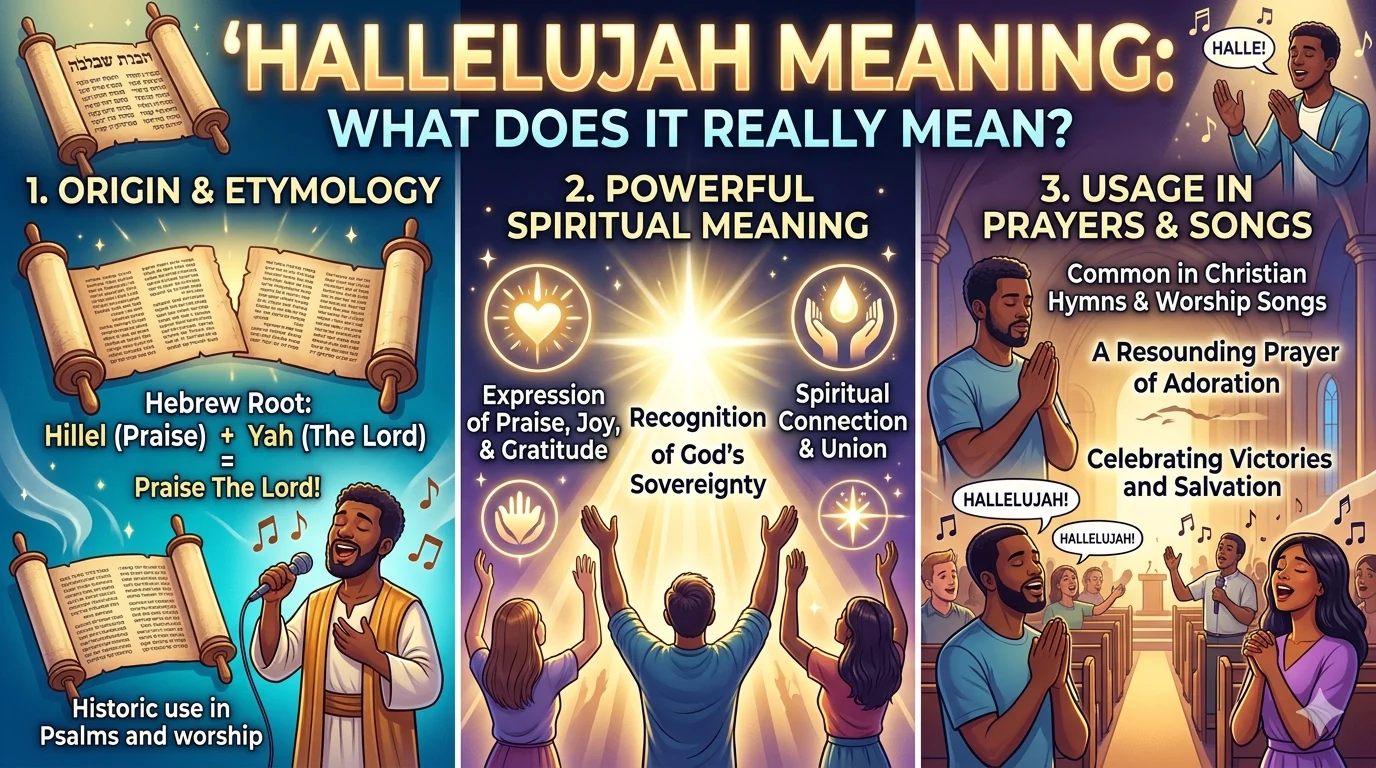
The hallelujah meaning comes from the Hebrew phrase “Hallelu Yah,” where hallelu means “praise” and Yah refers to God. Together, it forms a beautiful expression of worship and thanksgiving.
The meaning of hallelujah in the Bible is closely tied to praising God in times of joy, victory, and gratitude. Today, people also use it in everyday life to express relief, happiness, or celebration.
Examples:
- “Hallelujah! My prayers have been answered.”
- “They sang ‘Hallelujah’ in the church service.”
In simple terms:
Hallelujah is a powerful word used to praise God and express deep joy or relief.
What Does Hallelujah Mean?
Hallelujah is an exclamation meaning “Praise the Lord” or expressing deep joy, gratitude, or relief.
It is a religious term often used in prayers, hymns, and spiritual songs, but it can also appear in everyday language to convey strong positive emotion.
Example:
- In a church service: “Hallelujah! The Lord has blessed us.”
- In everyday speech: “Hallelujah! I finally finished my exams.”
Origin and Popularity
The word hallelujah originates from the Hebrew phrase “hallelū Yāh”, meaning “praise Yahweh” (Yahweh being a name for God).
- Biblical Roots: First used in ancient Hebrew texts, including the Psalms.
- Christianity & Worship: Spread through Christian hymns and liturgies, especially in Europe during the Middle Ages.
- Modern Popularity: Songs like Leonard Cohen’s “Hallelujah” and contemporary gospel music helped it gain global recognition beyond religious contexts.
Timeline Snapshot:
| Period | Event |
| Ancient Times | Appears in Hebrew Bible Psalms |
| Middle Ages | Integrated into Christian worship |
| 18th–19th Century | Common in gospel hymns |
| 1984 | Leonard Cohen’s song popularizes it worldwide |
Hallelujah Meaning in Different Contexts
In Texting
Used to express relief, joy, or accomplishment.
Example:
- “Hallelujah! I passed my driving test!”
On Instagram / TikTok
Appears in captions or comments to highlight success, gratitude, or emotional highs.
Example:
- “Hallelujah 🙌 finally tried this new recipe and it’s amazing!”
In Religious Contexts
A sacred praise to God, often found in prayers, hymns, and spiritual gatherings.
Example:
- “Hallelujah, the Lord reigns!”
Platform Comparison Table:
| Platform | Usage | Tone |
| Texting | Joy, relief | Casual |
| Instagram/TikTok | Celebration, gratitude | Friendly & expressive |
| Religious / Worship | Praise to God | Formal, spiritual |
Examples of Hallelujah in Conversations
Casual Chat:
Friend 1: “I finally got that promotion!”
Friend 2: “Hallelujah! You deserved it.”
Text Message:
You: “I aced the test!”
Friend: “Hallelujah! Let’s celebrate!”
Formal/Religious Usage:
“Hallelujah! Let us give thanks for the blessings bestowed upon us.”
Similar or Related Terms
Boost your understanding with these related expressions:
| Term | Meaning |
| Amen | So be it; agreement in prayers |
| Praise the Lord | Directly acknowledges God’s goodness |
| Hosanna | Expression of adoration or approval |
| Glory | Honor or praise to God |
How to Use Hallelujah Correctly
Do’s:
✅ Use hallelujah to express joy, relief, or gratitude.
✅ Appropriate in religious, spiritual, or celebratory contexts.
✅ Works well in casual conversations among friends to show excitement.
Don’ts:
❌ Avoid using hallelujah sarcastically in professional emails.
❌ Don’t replace it with casual exclamations in sensitive religious discussions.
Common Mistakes or Misinterpretations
- Not just a religious term: Many think hallelujah is exclusively for worship. While it is religious, it’s also widely used in secular contexts.
- Avoid overuse in casual chats: Using it too often can make it feel exaggerated or insincere.
- Confusing with similar words: Words like amen or hosanna are related but have distinct meanings.
FAQs About Hallelujah
1. What does hallelujah mean in texting?
In texting, it conveys joy, relief, or success, often after accomplishing something or receiving good news.
2. Is hallelujah slang or formal?
It is a formal religious word, but modern usage allows casual, expressive use in everyday speech.
3. What’s the difference between hallelujah and amen?
Hallelujah expresses praise and joy, while amen usually signals agreement or affirmation at the end of a prayer.
4. How do you reply to hallelujah?
You can respond with “Amen,” “Absolutely,” or a simple “Yes!” depending on the context.
5. Where is hallelujah most used?
Mostly in religious worship, gospel music, and spiritual texts, but increasingly in social media, texting, and song lyrics.
6. When should you not use hallelujah?
Avoid using it sarcastically or in formal business communication, as it can seem inappropriate.
Conclusion
Hallelujah is more than just a word; it’s an expression of praise, gratitude, and joy with deep historical roots in Hebrew scripture. From ancient Psalms to modern social media captions, its usage has evolved while keeping its celebratory essence.
Now that you know the meaning, origin, and correct usage of hallelujah, you’ll never be confused when someone bursts out this word in a song, text, or conversation. Keep exploring our site for more trending terms and their real-life applications!

Dolly Parton is a professional content writer at maeningg.com, specializing in clear, engaging, and well-researched digital content. With strong expertise in writing about text slang, meanings, lifestyle, and informative articles, Dolly focuses on helping readers understand internet language in a simple and relatable way.