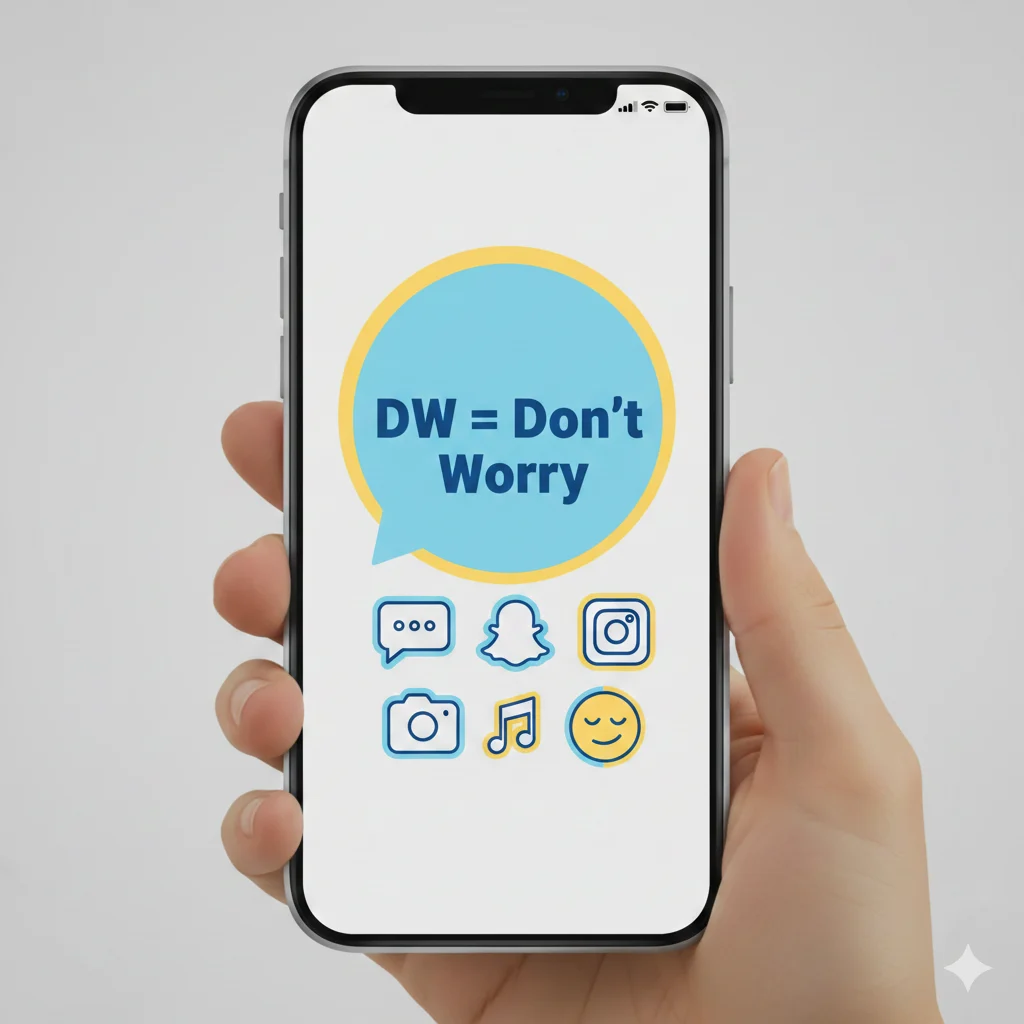
Ever seen someone reply with “DW” and wondered what it means? You’re not alone. Online chats and text messages are filled with abbreviations that can be confusing — and “DW” is one of the most common.
In this guide, you’ll learn everything about DW meaning, including its definition, origin, different contexts, and how to use it correctly. We’ll also share real-life examples, related terms, and common mistakes to help you understand this popular internet slang like a pro.
Whether you saw “DW” on Snapchat, WhatsApp, or Instagram — by the end, you’ll know exactly what it means and when to use it.
What Does DW Mean?
DW stands for “Don’t Worry.”
It’s a common internet abbreviation used to comfort or reassure someone in casual conversations, especially in texting, chats, and social media. You’ll often see it in messages like “DW, it’s all good!” or “DW about it.”
In short, “DW” means everything’s fine — no need to stress.
Origin and Popularity
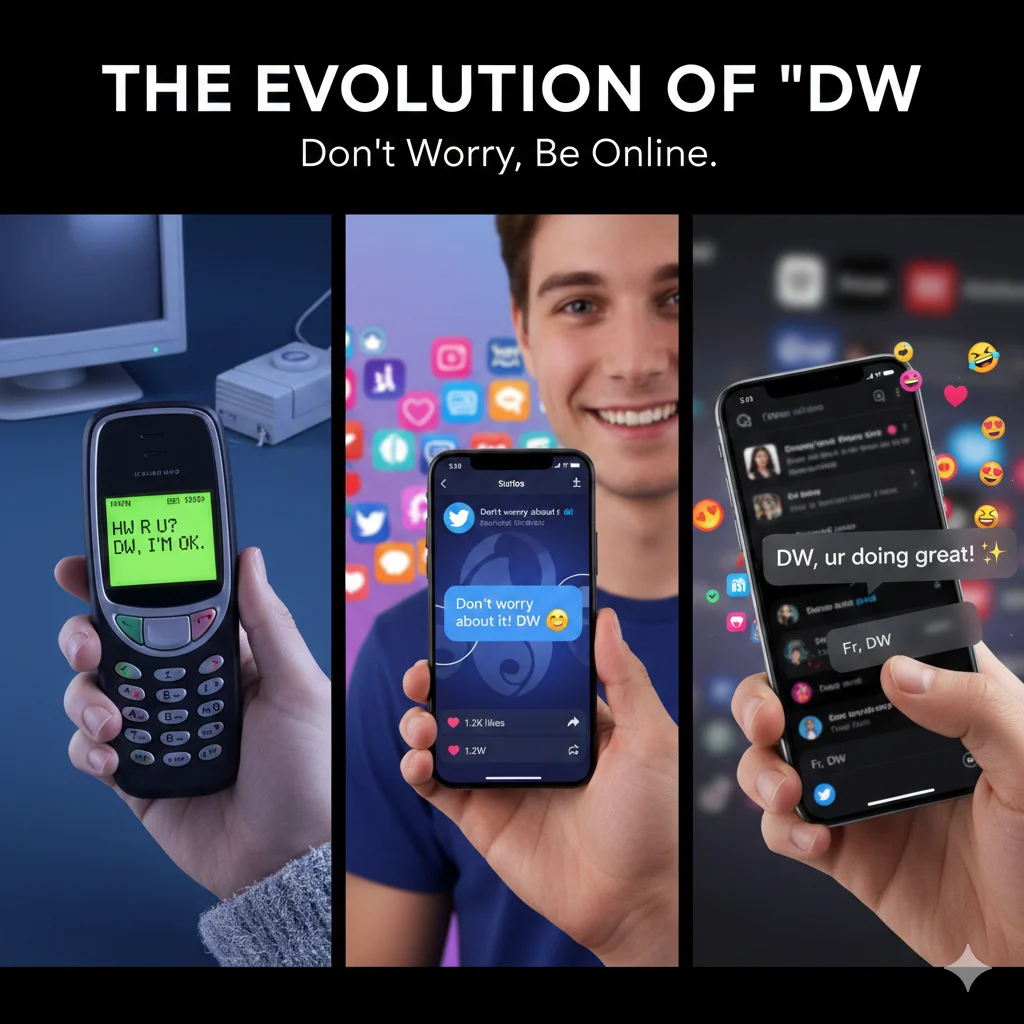
The term “DW” first appeared in online messaging platforms and early texting culture in the late 1990s when people shortened phrases to save time and characters.
It gained massive popularity in the 2010s with the rise of social media platforms like Facebook, Twitter (now X), and Instagram. Gen Z and millennials quickly adopted “DW” as a friendly and casual way to show reassurance or calm someone down.
By the 2020s, “DW” became standard internet slang — appearing everywhere from Snapchat streaks to TikTok comment sections.
DW Meaning in Different Contexts
| Platform/Context | Meaning / Tone | Example Usage |
| In Texting | Reassuring or comforting | “DW, I’ve got it covered.” |
| On Instagram/TikTok | Casual or humorous tone | “DW, I didn’t actually fall 😅” |
| In Gaming Chats | Means “Don’t Worry” or sometimes “Dear Wife” (rare) | “DW, I’ll respawn soon.” |
| In Business / Formal Settings | Not recommended — too informal | Instead of “DW,” use “No worries” or “It’s okay.” |
Examples of DW in Conversations
💬 Casual Text Example
Friend 1: Hey, sorry I’m running late.
Friend 2: DW! I’m not there yet either 😄
💬 Social Media Example
Comment: “You looked upset in that video!”
Reply: “DW, it was just for the trend 😂”
💬 Gaming Chat Example
Player 1: “I messed up the level.”
Player 2: “DW, we’ll try again.”
💬 Formal Alternative Example
Email: “No worries, the document will be ready tomorrow.”
(Here, “No worries” replaces DW in a professional way.)
Similar or Related Terms
| Term | Meaning | When to Use |
| WYD | What You Doing | To ask what someone’s up to |
| HBU | How About You | To continue a friendly chat |
| LMK | Let Me Know | To ask for updates |
| NP | No Problem | As a polite or professional “DW” alternative |
| IDK | I Don’t Know | When unsure or uncertain |
These are often used alongside “DW” in casual online chats.
How to Use DW Correctly
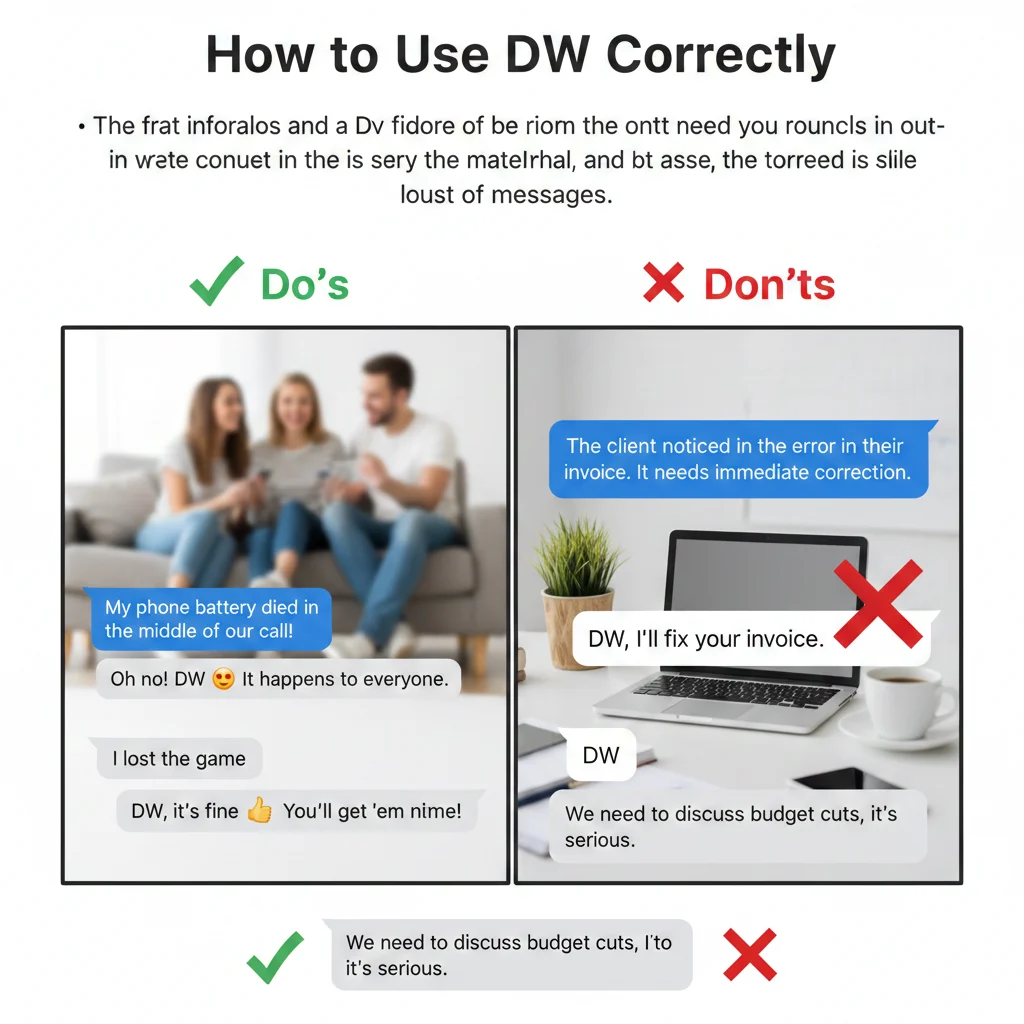
✅ Do’s:
- Use it in informal conversations.
- Use it to comfort or reassure someone.
- Pair it with emojis for tone clarity: “DW 😊” or “DW, it’s fine 👍.”
❌ Don’ts:
- Avoid using it in emails, school reports, or business chats.
- Don’t use it when tone may be misunderstood — like in serious discussions.
Example:
✅ “DW, it happens to everyone.”
❌ “DW, I’ll fix your invoice.” (too casual for work)
Common Mistakes or Misinterpretations
- Confusing “DW” with “DW (Doctor Who): Some fans use “DW” to refer to the British TV show Doctor Who.
- Overusing “DW”: Using it too often can make you sound dismissive.
- Misreading Tone: “DW” might seem cold in serious texts. If someone’s upset, write a fuller response like “Don’t worry, I understand.”
FAQs
1. What does DW mean in texting?
In texting, “DW” means “Don’t Worry.” It’s used to calm or reassure someone in casual conversation.
2. Is DW slang or formal?
“DW” is slang, not formal. It’s best used with friends, family, or on social media — not in professional communication.
3. What’s the difference between DW and NP?
Both express reassurance. “DW” means don’t worry, while “NP” means no problem. “NP” can sound more polite and is sometimes acceptable in work chats.
4. How do you reply to DW?
You can say “Thanks!”, “Okay!”, or “Got it!” depending on the tone. Example: “DW, it’s fine.” → “Thanks, appreciate it.”
5. Where is DW most used?
It’s mostly used in text messages, Snapchat, TikTok comments, and casual DMs.
6. When should you not use DW?
Avoid it in professional emails, academic writing, or serious emotional conversations where tone matters.
Conclusion
Now you know that DW simply means “Don’t Worry” — a quick, friendly way to comfort someone in online chats. Originating from early texting slang, it’s now a part of modern digital language across platforms like TikTok and Instagram.
So next time someone says “DW,” you’ll know they’re just telling you to relax. 😉
Keep exploring our site for more trending internet slang meanings and stay ahead of the chat game!

Kris Kristofferson is a professional content writer at maeningg.com, specializing in clear, engaging, and well-researched digital content. With strong expertise in writing about text slang, meanings, lifestyle, and informative articles, Kris focuses on helping readers understand internet language in a simple and relatable way.