Ever come across the word “cohort” and wondered what it truly means? Maybe you’ve seen it in a school report, a business presentation, or even on social media, and the context wasn’t immediately clear. Cohort is a versatile term used in education, business, research, and everyday life, and understanding its meaning can help you interpret conversations, articles, and reports more confidently.
In this article, we’ll explore the definition of cohort, its origin and popularity, how it’s used across different platforms and contexts, real-life examples, related terms, and some frequent questions. By the end, you’ll be able to use “cohort” correctly in any setting—without hesitation.
What Does Cohort Mean?
A cohort is a group of people who share a common characteristic or experience within a defined period.
- Type: Formal term (not slang)
- Common Uses: Education, research, business, and social discussions
Example:
“The study followed a cohort of students who started college in 2023.”
Origin and Popularity
The term cohort originates from the Latin word “cohors,” which referred to a military unit of soldiers in ancient Rome. Over time, the word evolved to mean any group of people sharing a common characteristic.
- 19th Century: Became popular in educational and sociological studies
- Modern Use: Commonly used in research papers, marketing analytics, and business reports
- Cultural Note: Often associated with structured groups, like student batches or study participants
Timeline Highlight:
- Ancient Rome: Cohorts were military units of roughly 480 soldiers.
- 1800s: Scholars used the term to describe social groups for study.
- 2000s–Present: Widely used in business analytics, online courses, and education studies.
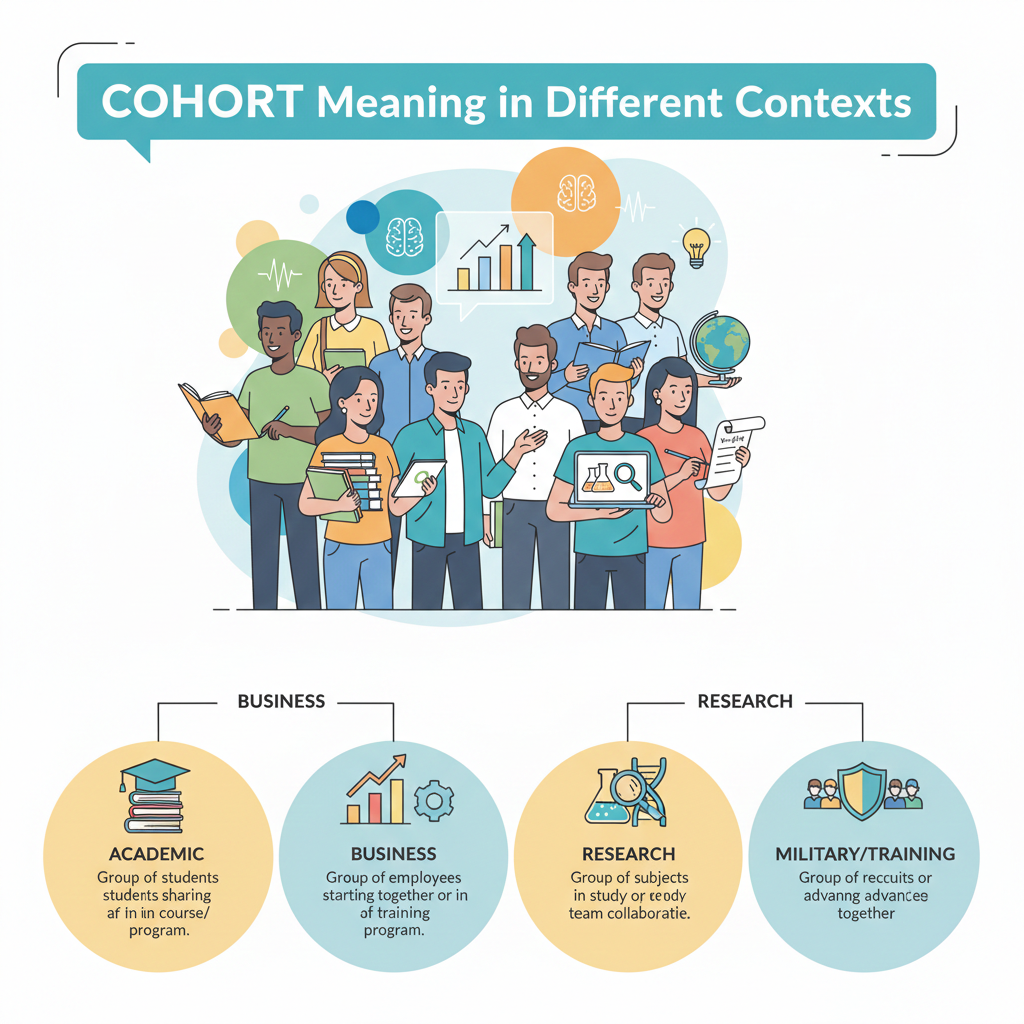
Cohort Meaning in Different Contexts
In Education
- Refers to a group of students progressing together through a curriculum.
Example:
“Our MBA cohort will graduate in 2026.”
In Business
- A group of customers or employees tracked for analysis.
Example:
“The marketing team studied last year’s cohort to understand retention trends.”
In Research
- Participants in a scientific or social study sharing a characteristic.
Example:
“This cohort of adults aged 30–40 was surveyed about health habits.”
Social / Online Usage
- Sometimes used loosely to describe a group of friends or followers.
Example:
“Our gaming cohort meets every weekend online.”
🎯 Conundrum Meaning: Definition, Origin, and Real-Life Usage
Comparison Table Across Contexts
| Context | Meaning | Example |
| Education | Group of students | “The cohort starts classes in September.” |
| Business | Group of employees/customers | “Cohort retention is improving this quarter.” |
| Research | Study participants | “A cohort of 500 participants was analyzed.” |
| Social Media | Group of friends or followers | “Join our gaming cohort on Discord.” |
Examples of Cohort in Conversations

Friend Chat:
Friend 1: “Which cohort are you in for the online course?”
Friend 2: “I’m in the morning cohort, starting Monday.”
Professional Chat:
Manager: “The new hire cohort will complete onboarding next week.”
Academic Conversation:
Student: “Our cohort project is due this Friday.”
Formal Usage Example:
“The CEO emphasized the importance of developing a strong cohort of future leaders.”
Similar or Related Terms
To expand your vocabulary, here are some terms related to cohort:
| Term | Meaning | Usage Example |
| Group | Any collection of people | “A group of students attended the workshop.” |
| Batch | People processed or grouped at the same time | “The new employee batch starts training today.” |
| Class | Students in the same academic year | “Our class has 50 students this year.” |
| Team | People working together on a project | “The marketing team launched the campaign.” |
How to Use Cohort Correctly
✅ Do:
- Use it in professional, academic, or formal contexts
- Refer to groups sharing a common characteristic or timeline
❌ Don’t:
- Use it as slang in casual conversations with friends
- Confuse it with informal terms like “crew” or “squad”
Tip: Cohort is versatile but leans formal. Use casually only if your group appreciates structured language.
Common Mistakes or Misinterpretations
- Mistake: Thinking “cohort” means just any group
- Correction: It specifically refers to a group with a shared characteristic, experience, or timeline.
- Correction: It specifically refers to a group with a shared characteristic, experience, or timeline.
- Mistake: Using “cohort” interchangeably with friends or social groups in informal chat
- Correction: Use “crew” or “gang” in casual conversations.
- Correction: Use “crew” or “gang” in casual conversations.
FAQ
What does cohort mean in education?
In education, a cohort is a group of students moving through a program together. This helps track progress and plan activities effectively.
Is cohort slang or formal?
Cohort is a formal term used in business, education, and research. It is not slang.
What’s the difference between cohort and group?
While a group can be any collection of people, a cohort specifically shares a common characteristic, experience, or timeframe.
How do you reply if someone asks about your cohort?
Simply identify the group or batch you belong to, e.g., “I’m in the evening cohort for the course.”
Where is cohort most used?
It’s mostly used in academic, research, and business settings, though occasionally in structured online communities.
When should you not use cohort?
Avoid using it in casual chats or social media when referring to friends. Opt for informal alternatives like “team” or “crew.”
Conclusion
Now that you know the meaning of cohort, its origin, and how to use it correctly, you can confidently include it in your academic papers, business reports, or professional conversations. Whether you’re discussing a student batch, a customer group, or a research study, the word conveys structure and shared experience.
Remember, “cohort” is formal and precise, making it ideal for professional contexts. Keep exploring our site for more definitions of trending terms, acronyms, and slang—you’ll never get confused again!

Kris Kristofferson is a professional content writer at maeningg.com, specializing in clear, engaging, and well-researched digital content. With strong expertise in writing about text slang, meanings, lifestyle, and informative articles, Kris focuses on helping readers understand internet language in a simple and relatable way.